Dear India,
I don’t know exactly how or why, but you work. And more than just occasionally, you totally rock it! Here are some random cases in point (along with some random pictures):
Getting things done: I was staying overnight at a friend’s house and I casually commented that I needed to get my hair cut. She took out her phone (it was 9:00 p.m.) and called her neighbour, a beautician. Could she come over to give me a haircut? Why yes, she could, and by 9:45, I had a new haircut. Truth to tell, I was thinking, “Well, this might not turn out to be a very good haircut, but whatevs, it’ll grow out.” But guess what? It was a good haircut! Many things in India are quite easy to do, because there is so much labor out there. It’s generally a matter of a phone call to get an electrician, construction worker, gardener, etc., to come and take care of whatever household task you may have. And they will come soon – not in two weeks “sometime between the hours of 10:00 and 4:00”! On the flip side, labor is very cheap and the result is that for many people it is probably difficult to make a real living wage.
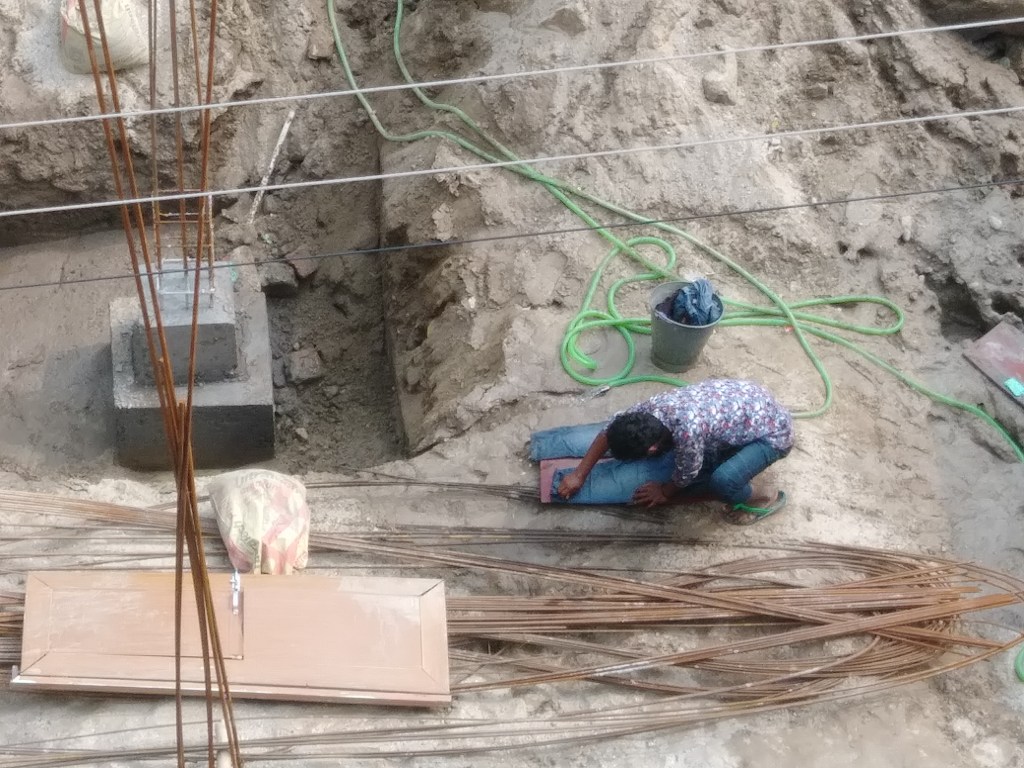
Closeness: There’s a different sense of closeness here. People need and want to be in close proximity to one another. Relatedly, it is rare to see an outdoor scene in which there is not at least one person – in fact, many people! When I get up in the morning, usually around 6:30 or so, I go out to my balcony and look down at the street scene below to see how many people I can see. I can usually count around 15-20 people, some walking, some sitting around chatting, some doing this-and-that, who-knows-what. If I do the same thing from my front porch at home, I will wait 45 minutes before someone wanders by, usually walking their dog, or a bit later, kids on their way to school. In American society the individual is so much more isolated. That’s not news to anyone, but it is interesting to see the differences in action. There is actually something kind of lovely about being packed cheek by jowl into the back of a car or in a toto, or sitting in a group to chat where people in the group are sitting very close to one another. Though I’m pretty far to the introversion side of the spectrum, I have enjoyed both observing and being part of that closeness. It is nice to see, for example, two male friends sitting with their arms around one another, or walking hand in hand. Or to see 20 year old young men reaching out to hold and play with babies, babies who get passed around in a group as a matter of course.
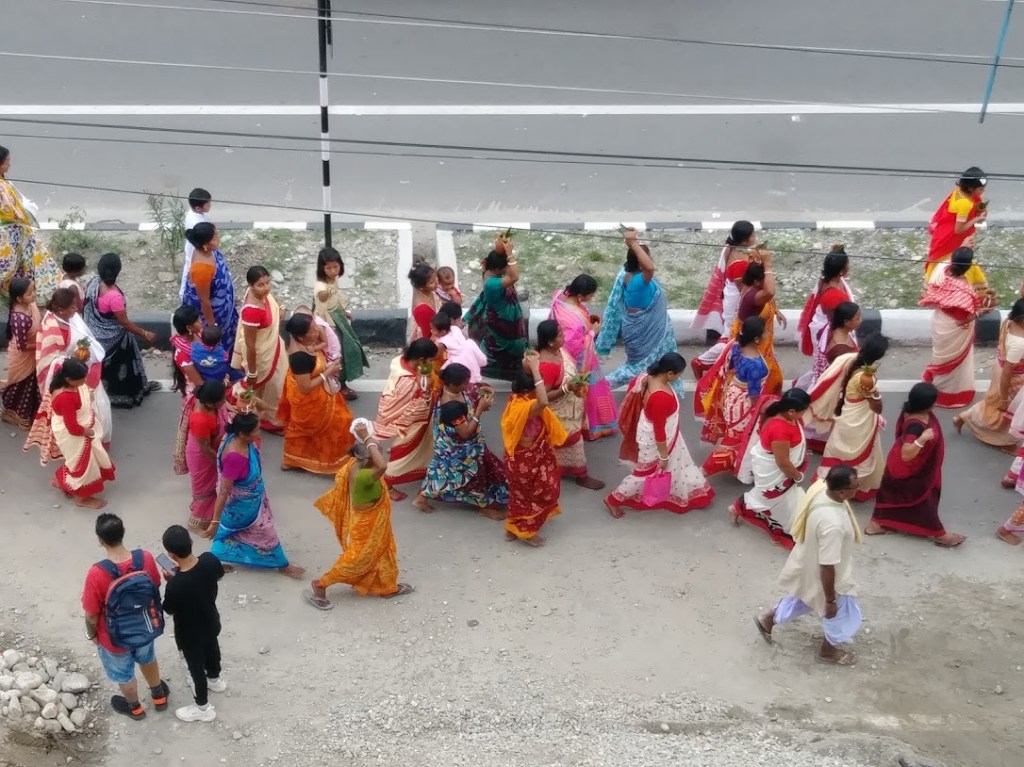
Young people: Young people here, at least those whom I’ve interacted with at NBU, are phenomenal – smart, energetic, hard-working. Give them opportunity, meaningful and decent-paying jobs, and they’ll take off and so will India. It seems to me they are poised in the balance now, poised between hope and resignation (I won’t say “despair”). If the government or economy can help tip the balance toward hope, and they have the chance to do their thing, (i.e., they don’t have to come to America to do it there, although I’d be delighted to have them and they can all stay at my house!) then it seems like India will be set to move ahead into the future. I have a sense that it may take a new generation of political leaders, politicians who have not been jaded by endemic corruption and are using their political clout primarily as a way to line their pockets.
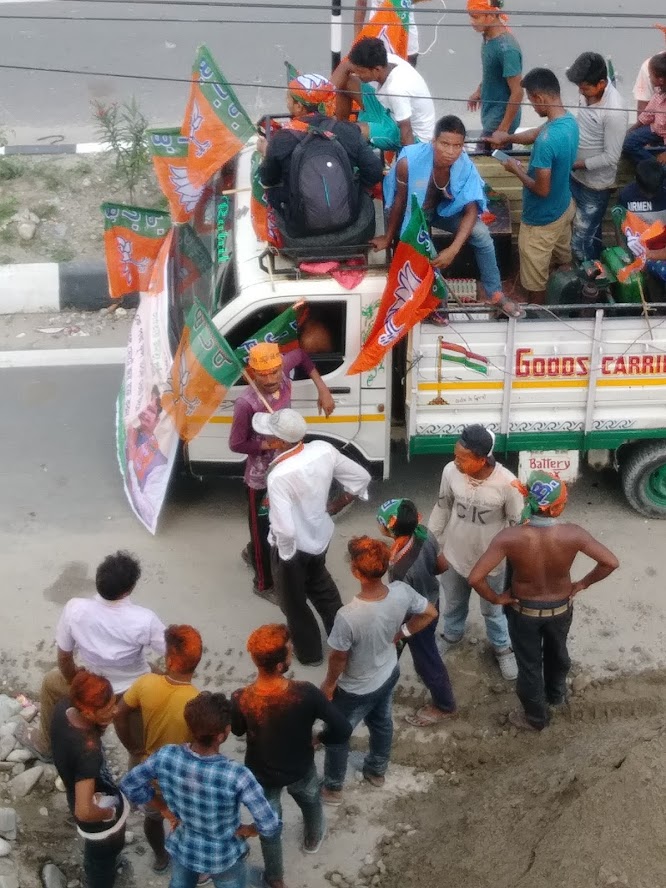
Patience: People here tend to be incredibly patient, which is a great quality, though it can also be “too much of a good thing”. For example, at a level crossing (a RR crossing) the barrier comes down at least several minutes before the train passes. All traffic, a mixture of cycle rickshaws, totos, trucks, cars, buses, comes to a stop. (Pedestrians and bicyclists usually scoot under the barrier and cross before the train comes – even I did that once, but of course, my heart was in my throat even though the train was nowhere to be seen or heard!) Everyone sits and waits patiently for the barrier to rise. This can take as long as five minutes. I just don’t see the same thing happening in the US – drivers would be very anxious to get moving — I’ve seen cars rev up and reverse out of traffic while waiting at the RR crossing at Ruston Way, for example.
My students offer another example, which to me shows the “too much of a good thing” side of patience. As I’ve written elsewhere, classes rarely seem to start on time. This means that students are missing out on class time (although maybe other teachers extend their class times to compensate, I’m not 100% sure). And they patiently accept this – while to my way of thinking, they should complain and make sure their classes start on time! (Of course, I also recognize that students the world over are probably only too happy when class is cut short – it is just my fantasy that they hang on the professor’s every precious word.) I think I have become more patient during my time here, and patience has never been my strong suit. I’ve realized so often that there is just absolutely nothing I can do about _______ (fill in the blank with any number of challenging situations). I wonder if it will last once I’m back in the US. Maybe it is not actually “patience” but just “resignation”. In any case, it’s not a bad approach and I like it.
Saying farewell: History Department Faculty and Students. Tears were shed by me.
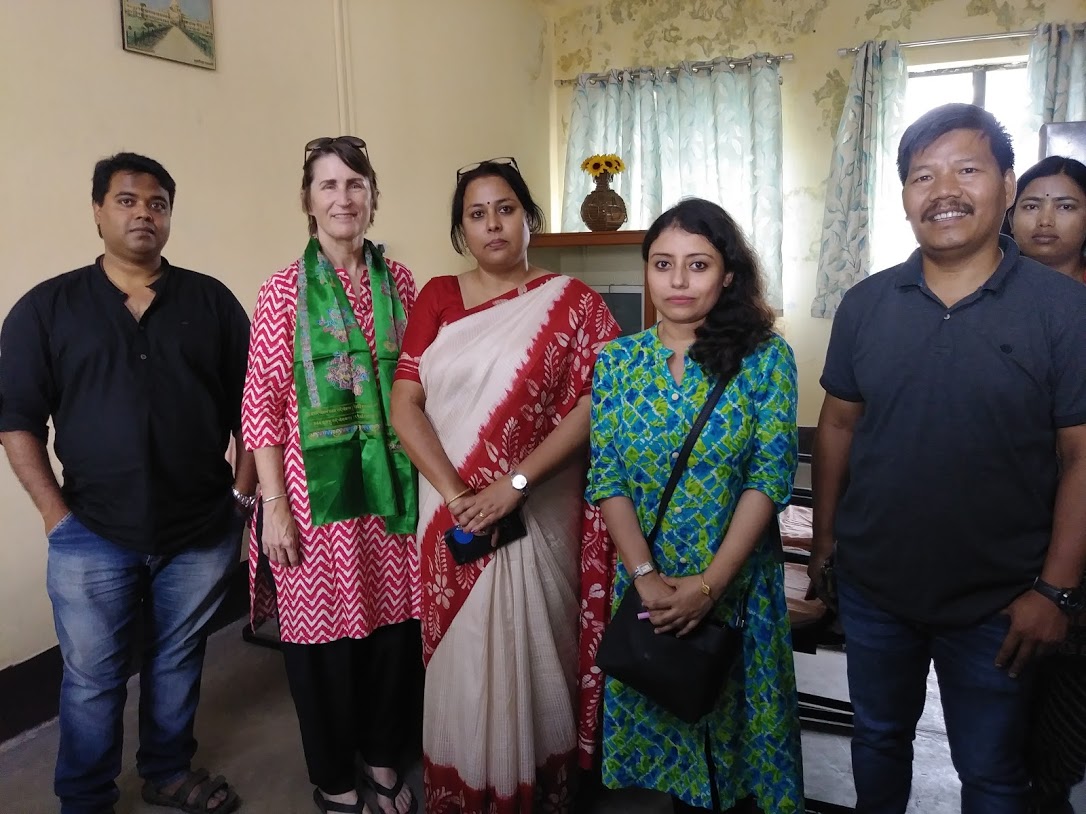
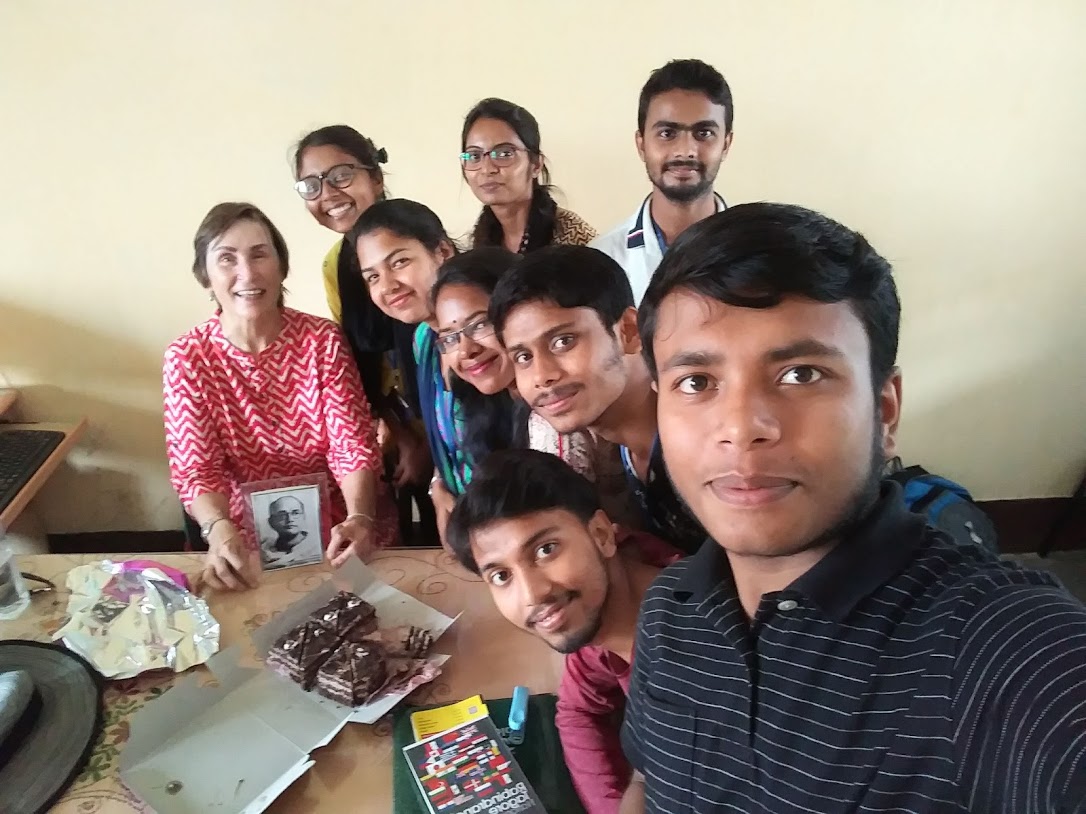
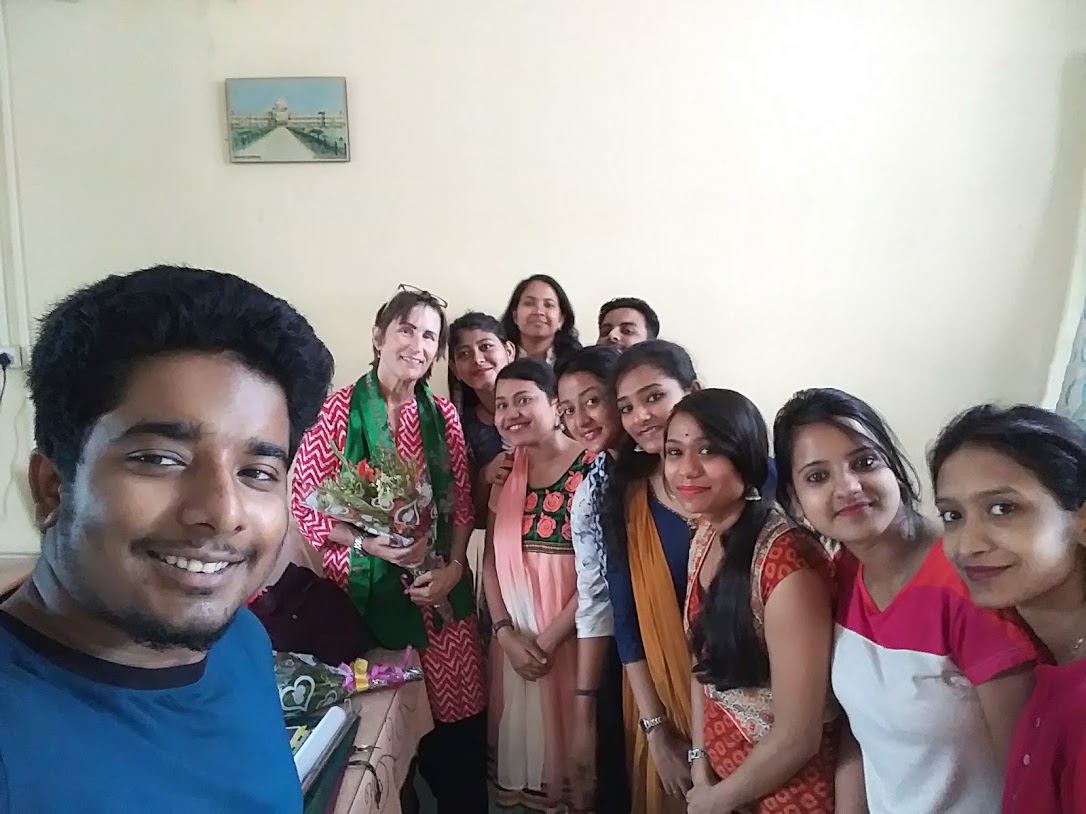
And…. These guys. I don’t know if I adopted them or they adopted me. Both, I guess. The best. Happy times and memories forever. Thanks.
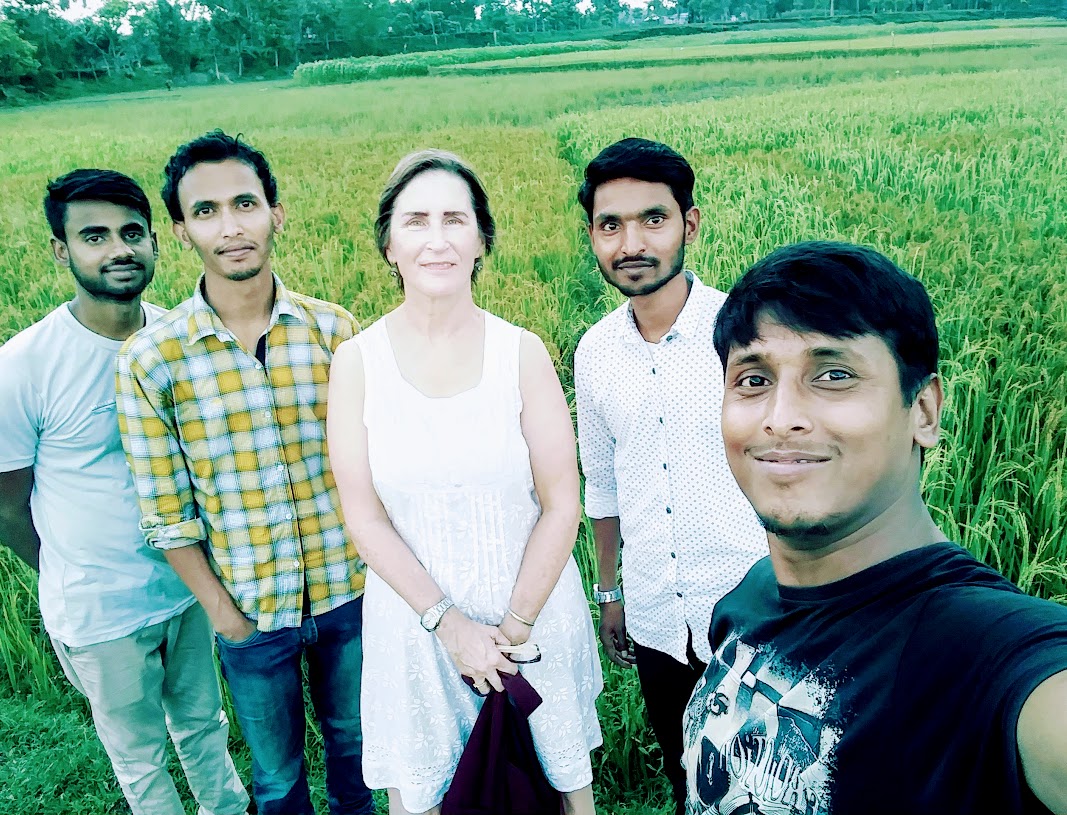
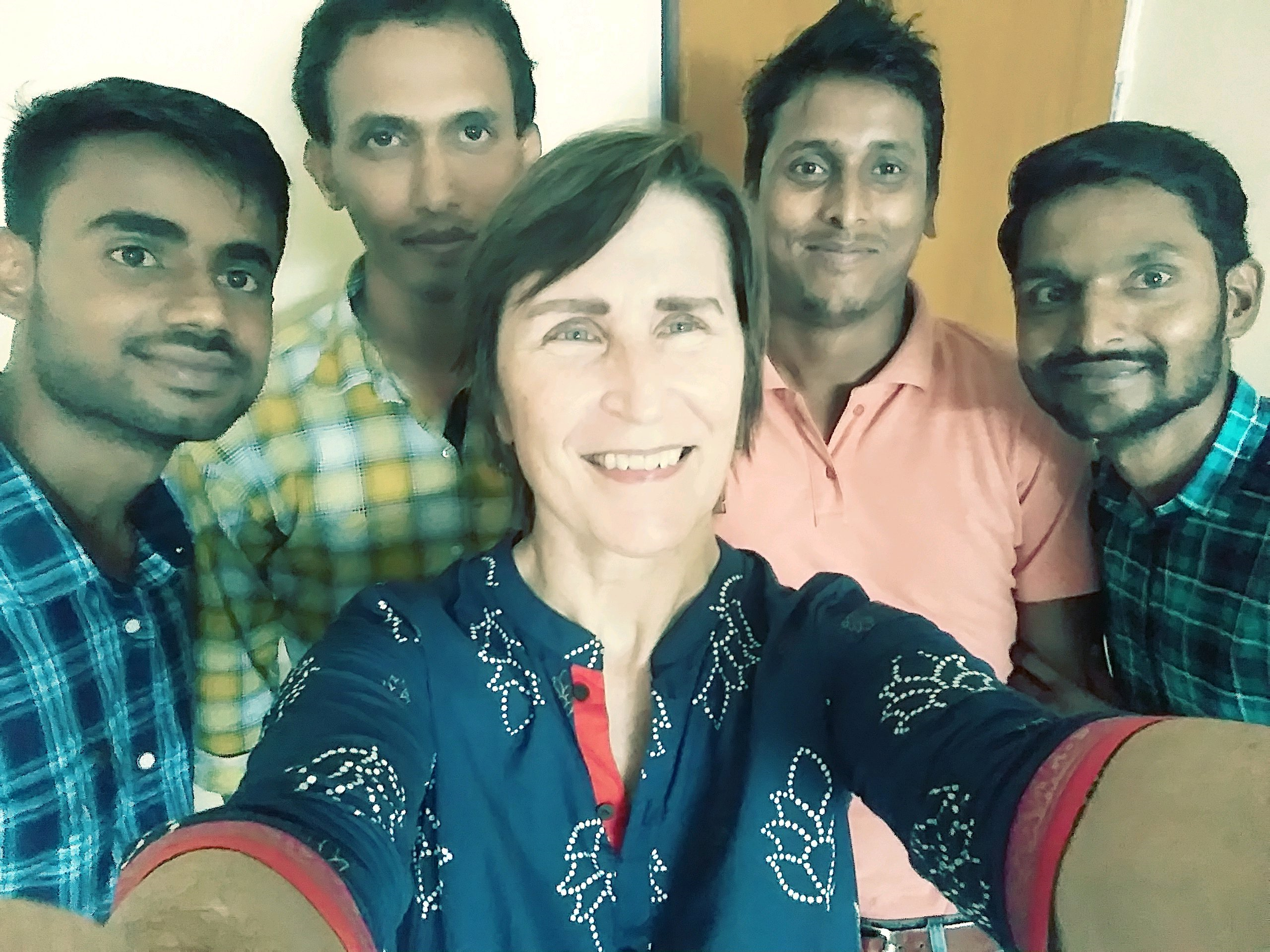
Thanks India! Love you lots! I’ll be back.
See you later,
Mary

 A Northwesterner in North Bengal
Hello Mary,
I loved this post! Often when I read these from you I feel like I’m actually there, and that is wonderful.
We miss you here in the Shire. When do you come home?
Ellen
On Mon, May 27, 2019, 5:21 AM A Northwesterner in North Bengal wrote:
> mhanneman posted: ” Dear India, I don’t know how or why, but you work. > And more than just occasionally, you totally rock it! Here are some random > cases in point (along with some random pictures): Getting things done: I > was staying overnight at a friend’s ” >
LikeLike
Thanks Ellen! I’m actually at the Delhi Airport right now — a very long layover, so natch, time for a blog post! See you soon!
LikeLike
Wonderful! This, of course, will always be part of you â for your benefit and evolution. Thank you. Bon voyage! Al
Sent from Mail for Windows 10
LikeLike
Thanks Al! Looking forward to seeing you soon.
LikeLike
Great post, Mary! Teary-eyed to think of your stay there ending…and happy that we will see you in the PNW soon.
xxox
LikeLike
Mary your posts made me so jealous. Such an adventure. Loved reading all of your posts. Happy travels home.
LikeLike