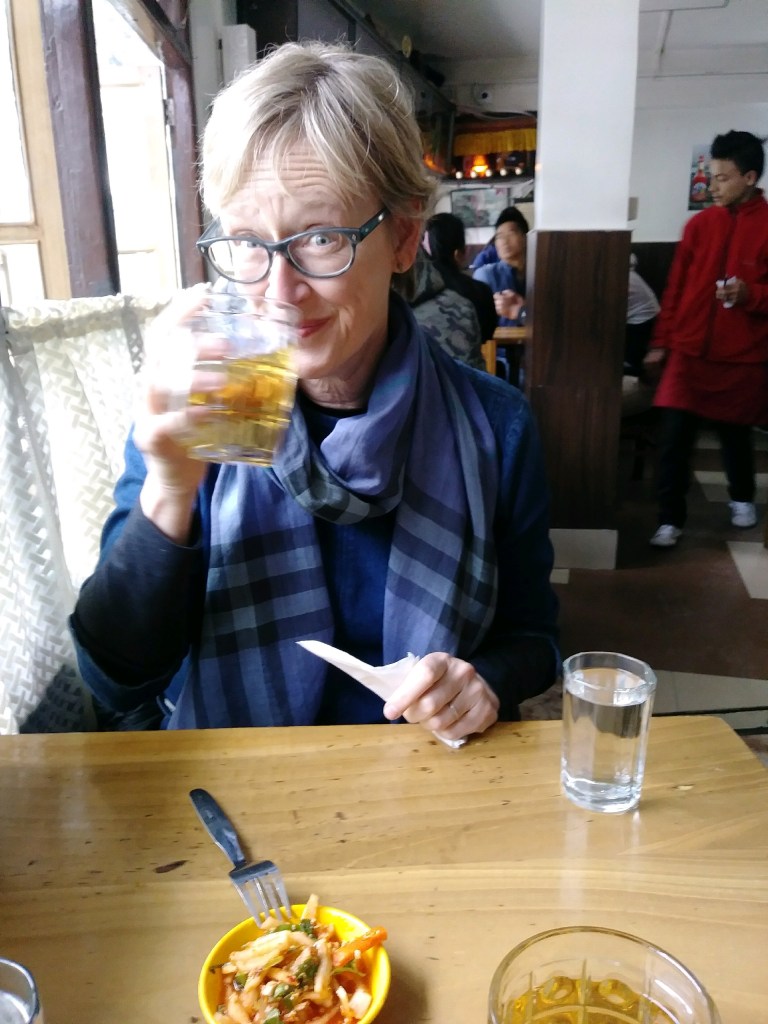
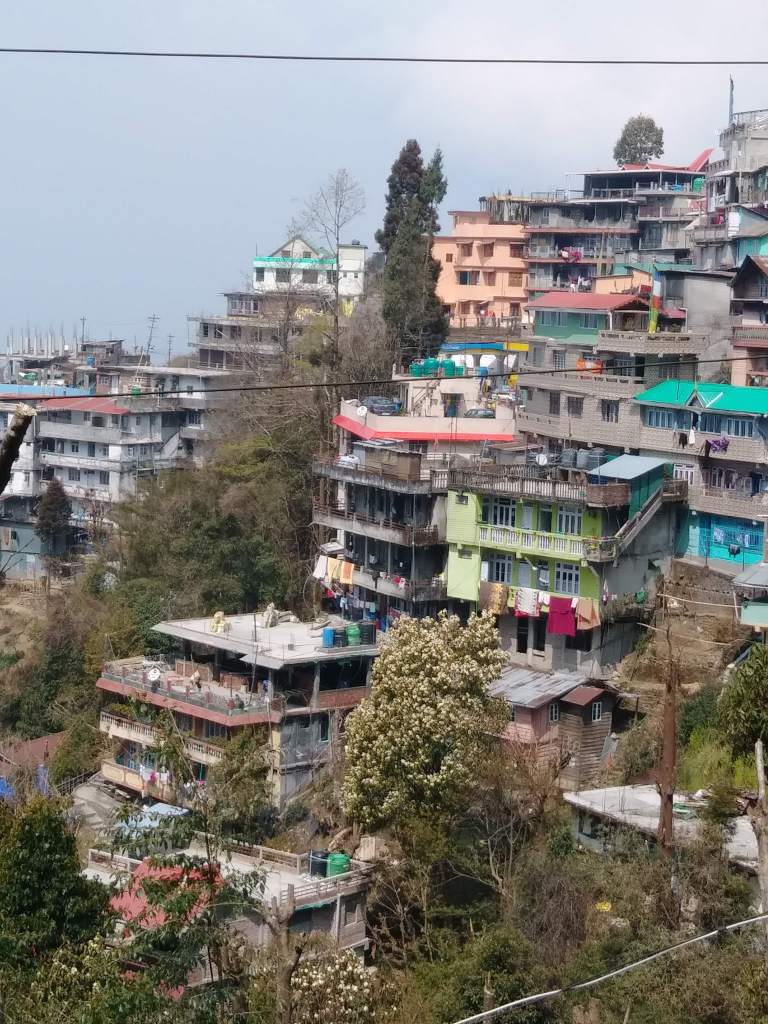
My friend Julie came to visit. Here are selected photos of our travels, starting out with an introductory picture of Julie enjoying a beer in a Tibetan restaurant in Gangtok, the capital of Sikkim. After hanging out for about a week in Siliguri, we hired a driver take us to the hills — Darjeeling. A “hill station,” Darjeeling is only about 40 miles from Siliguri, but it’s about a three hour drive, with hairpin turns and a climb in elevation from 400 feet to over 7,000 feet. Darjeeling, the “Queen of the Hills” was built up by the British in the 19th century, who used it as a place of respite from the intense summertime heat. In “Darjeeling: The Colorful History and Precarious Fate of the World’s Greatest Tea,” Jeff Koehler writes, “The town spread almost vertically along a semicircular ridge, with buildings plastered to the shelves of the hillside.”
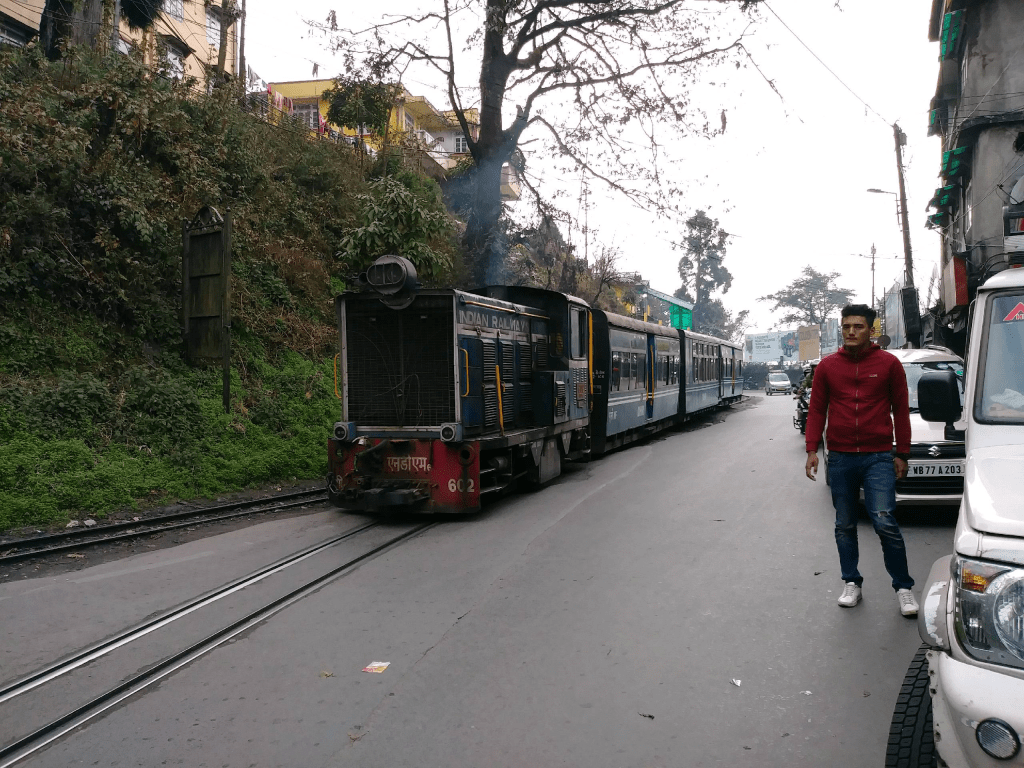
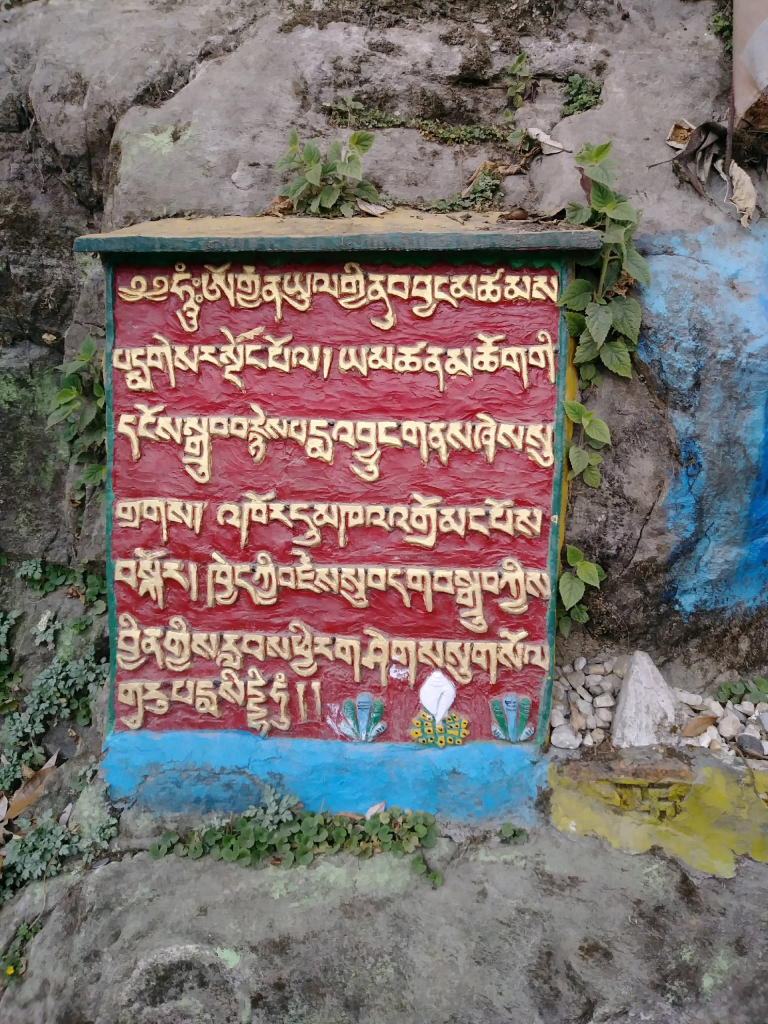
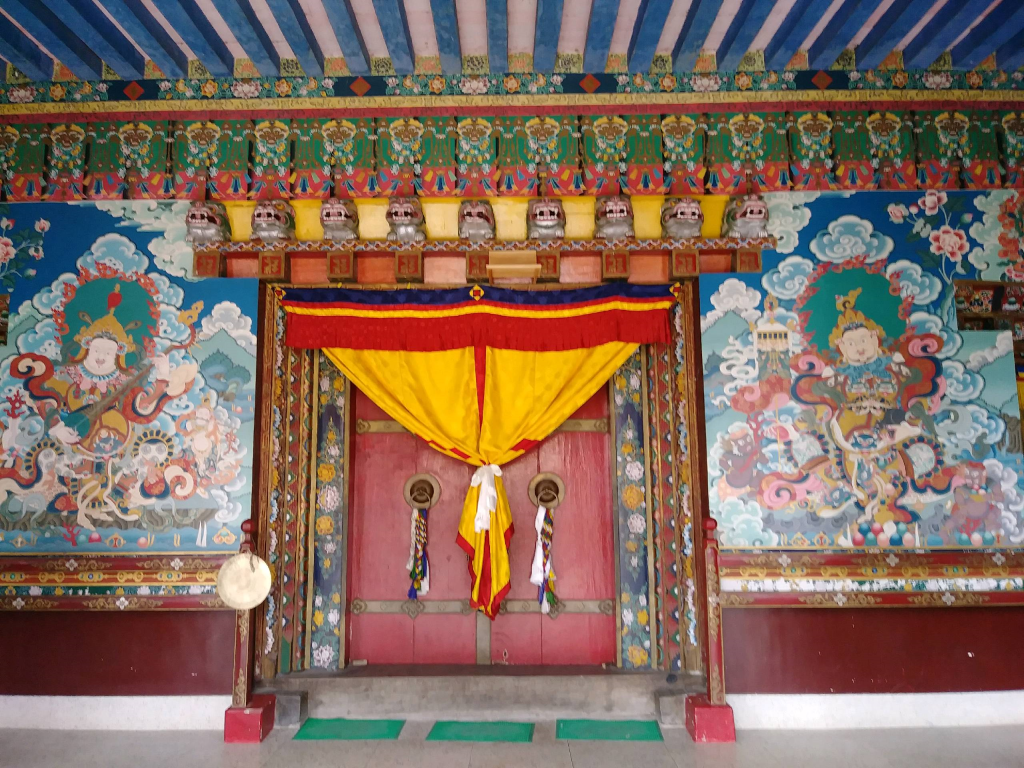
I finally, finally got to ride on the Darjeeling-Himalaya Railway. The railway was built in the late 19th century to take people from the plains — Siliguri’s sweltering summer heat — up to Darjeeling’s cool elevations, and to transport tea back down to Siliguri. The train and the tracks were in terrible disrepair for years, but parts have been refurbished and the DHRR is now listed as a UNESCO World Heritage site. A coal-powered steam engine pulls the train along the two-foot narrow gauge tracks, taking tourists on short “joy rides” in a 16 kilometer loop from Darjeeling to Ghoom Monastery and back. But the ride was not as magical or joyous as I imagined it would be: garbage was strewn along the entire route, and the sight of thick black coal soot belching into the atmosphere was distressing indeed. A Buddhist sutra in Tibetan script on a stone column near our Darjeeling hotel. From Darjeeling we drove to Gangtok, the capital of Sikkim. (Make that “we were driven” — by a driver whose parents had fled Tibet in the early 1970s, as China tightened control over Tibet). On a morning walk we wandered onto the grounds of the Tsuklakhang Palace Monastery. It was our good fortune that a man engaged in walking meditation — circumambulating the temple to gain good karma, he said — called on a young monk to unlock the temple for us and we were able to explore the interior on our own. The picture shows the front entrance of the temple. Sikkim was an independent Buddhist kingdom until 1975, when by referendum the people of Sikkim voted to join India. (An interesting side note: in 1963 the last king of the Namgyal Dynasty married Hope Cooke, an American woman; she became the last Crown Princess of independent Sikkim.)
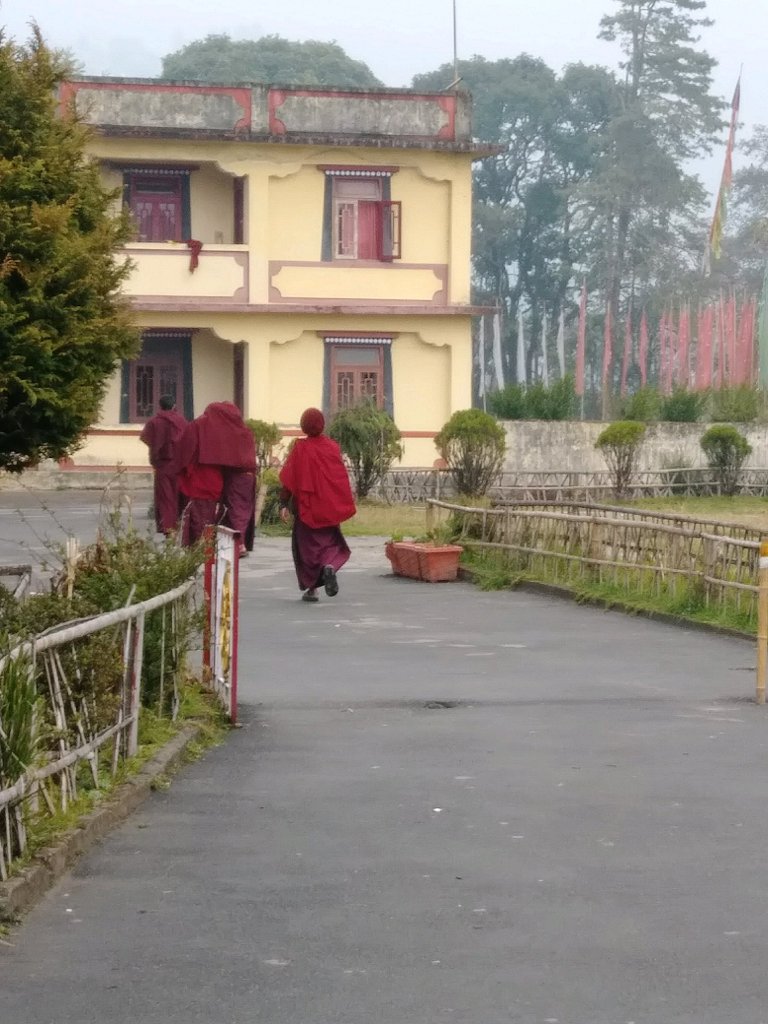
On the grounds of the Tsuklakhang Palace Monastery. The young novices are walking toward the dormitory. Behind the gray cement wall and the red and white prayer flags is a big soccer field for the boys to play on — boys will be boys and boy monks will also be boys!
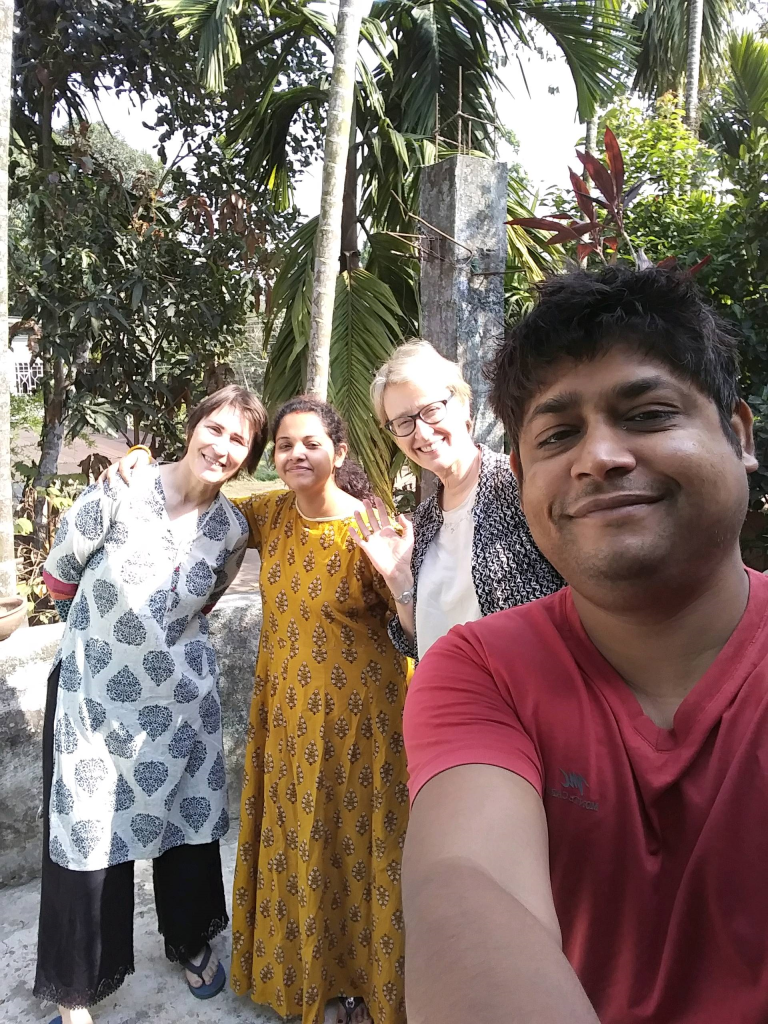
After our trip to the hills, we took a much shorter trip — a couple of overnights in Maynaguri, where Caroline and I lived for five months in 2010. We stayed with the always beautiful Rakhi and the amazing Sam, wonderful to spend time with them. Only disappointment was that their almost-10-year-old son Riom was away visiting his aunt while we were there.
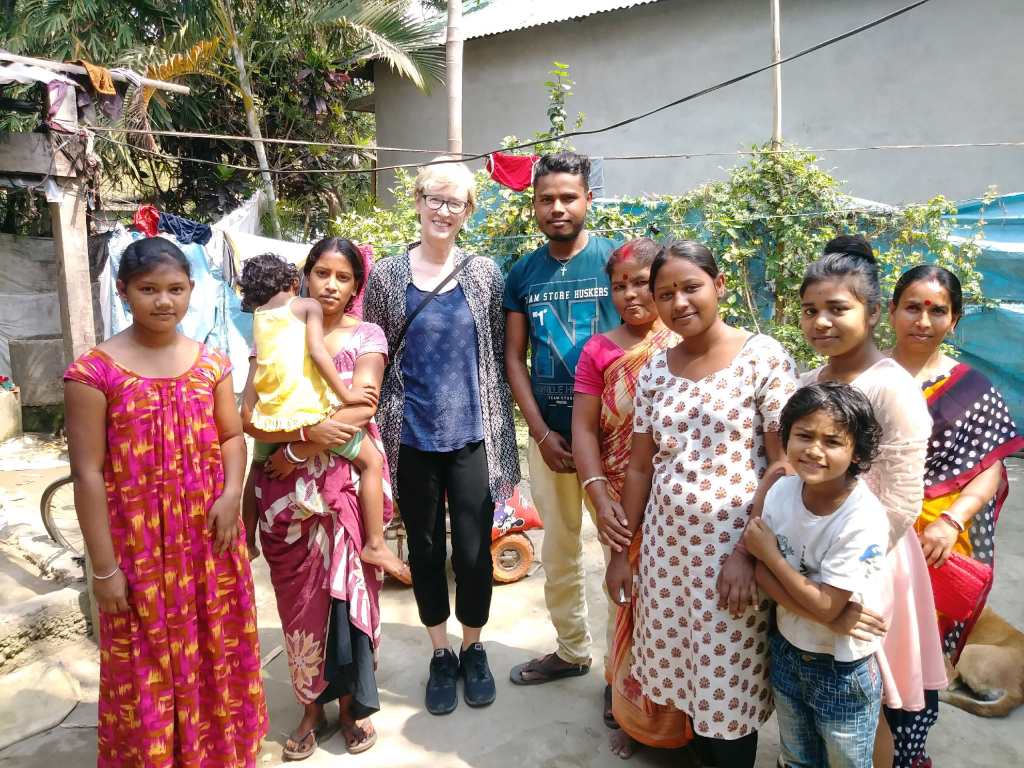
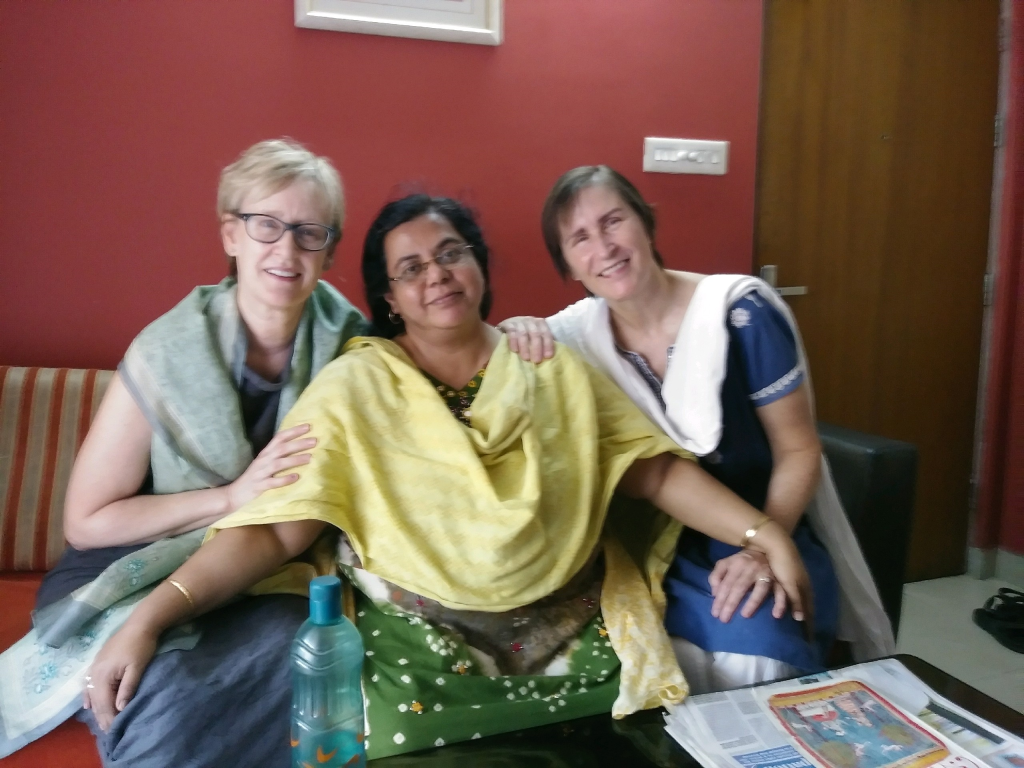
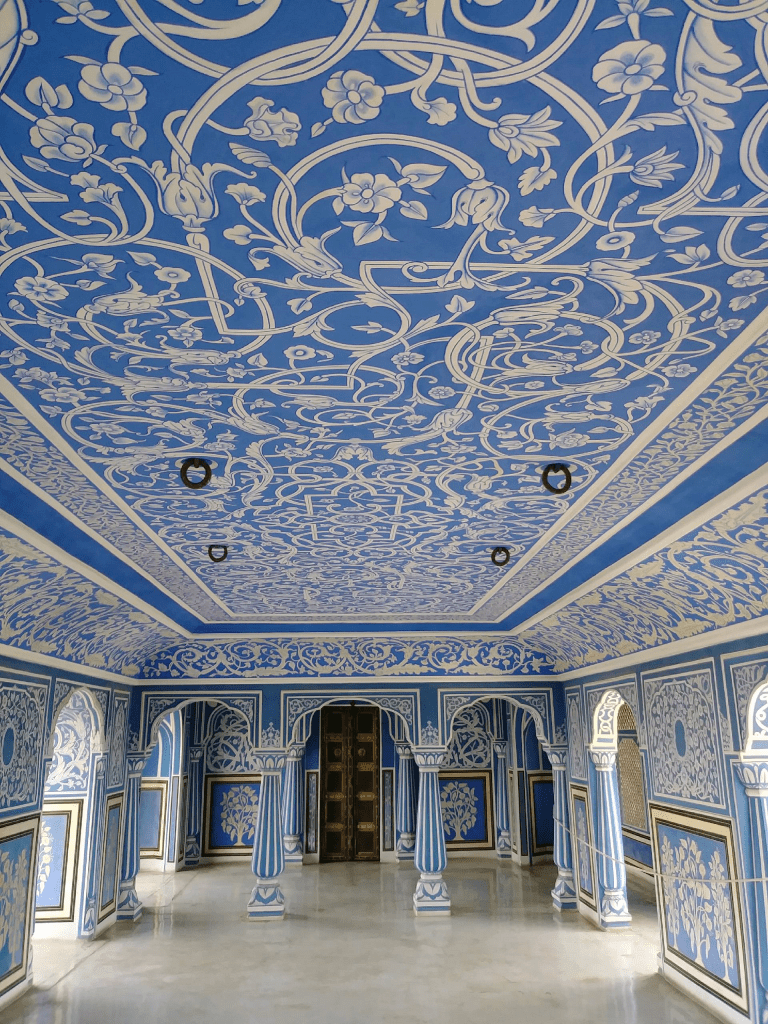
More friends in Maynaguri. To the right of Julie is Biltu, in front of him is his mother, and in front of her is Biltu’s sister Tuli.Sarbari, my downstairs neighbor, acting proprietorial, in her lovely Sarbari way. Okay — remember the before and after pics of my flat…? Unfortunately, this picture has absolutely nothing to do with my flat. We took a trip to Rajasthan. Here is an interior in the City Palace, where the royal family of the former princely state of Jaipur resides (only part of the complex is open to the public). The then-Maharaja and his family surrendered political power upon India’s gaining independence in 1947, but they remain in Jaipur and play an active role in the artistic and cultural life of the city. The current Maharaja is 21 years old, a student at NYU, and a member of the Indian national polo team! Eligible bachelor! (By the way, were you wondering what the black rings attached to the ceiling are? That’s where you hang the swings, of course!)
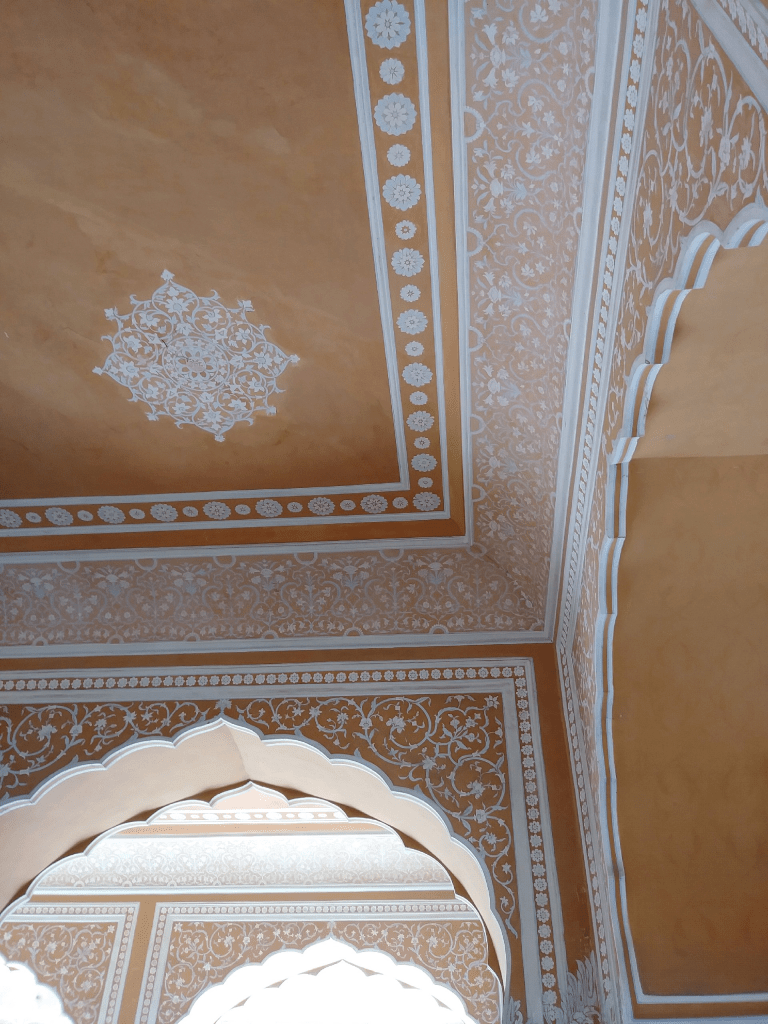
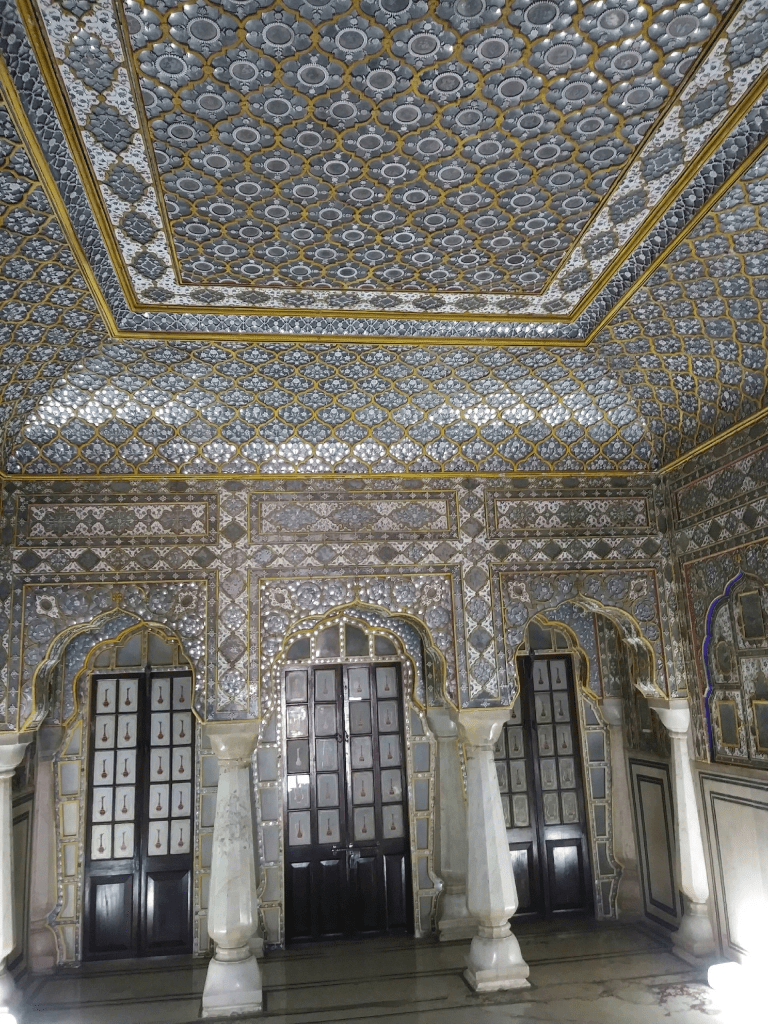
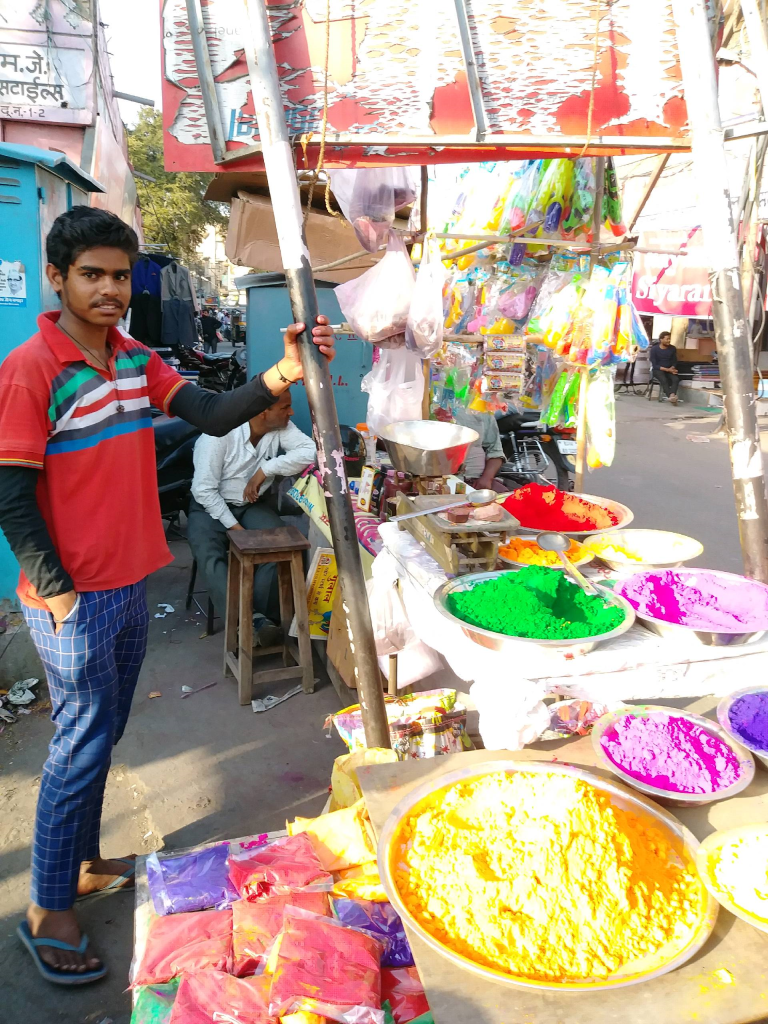
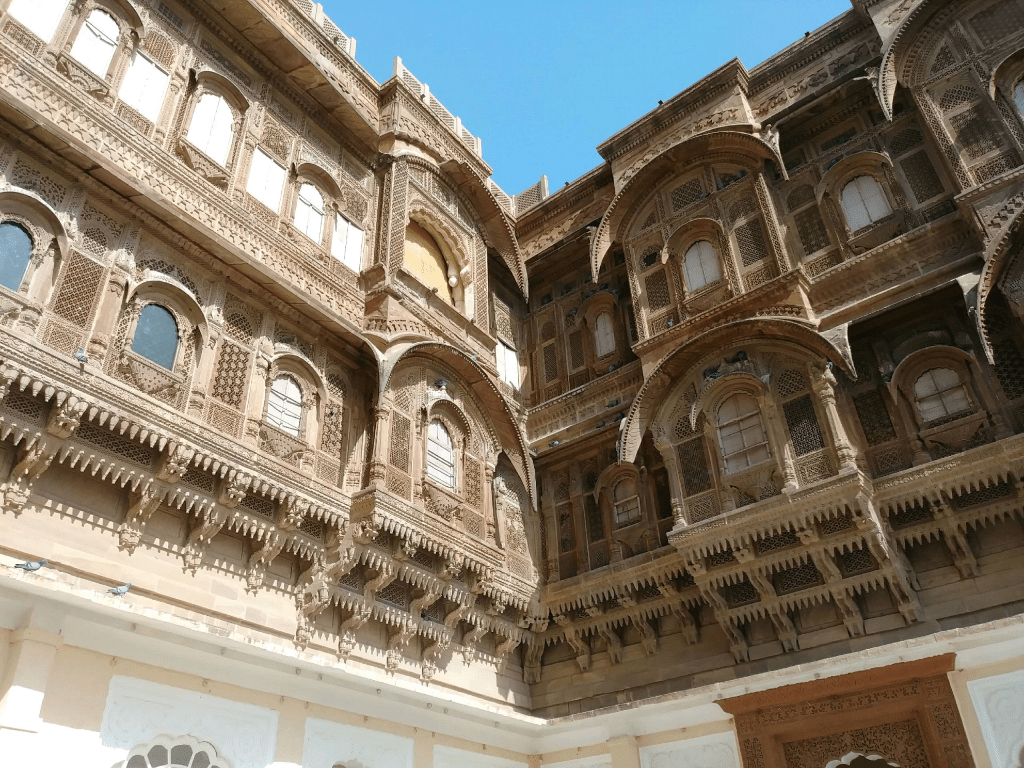
This also has nothing to do with my flat. A ceiling in the Jaipur City Palace. Also not a ceiling in my flat…Selling Holi colors in Jaipur.After Jaipur we went to Jodhpur. This is part of the Mehranghar Fort in Jodhpur, built in the mid-15th century by Rao Jodha, founder of Jodhpur. Like Jaipur, Jodhpur was a princely state whose rulers were divested of power in 1947. (This picture is just a tiny portion of a huge and amazing fortress.)
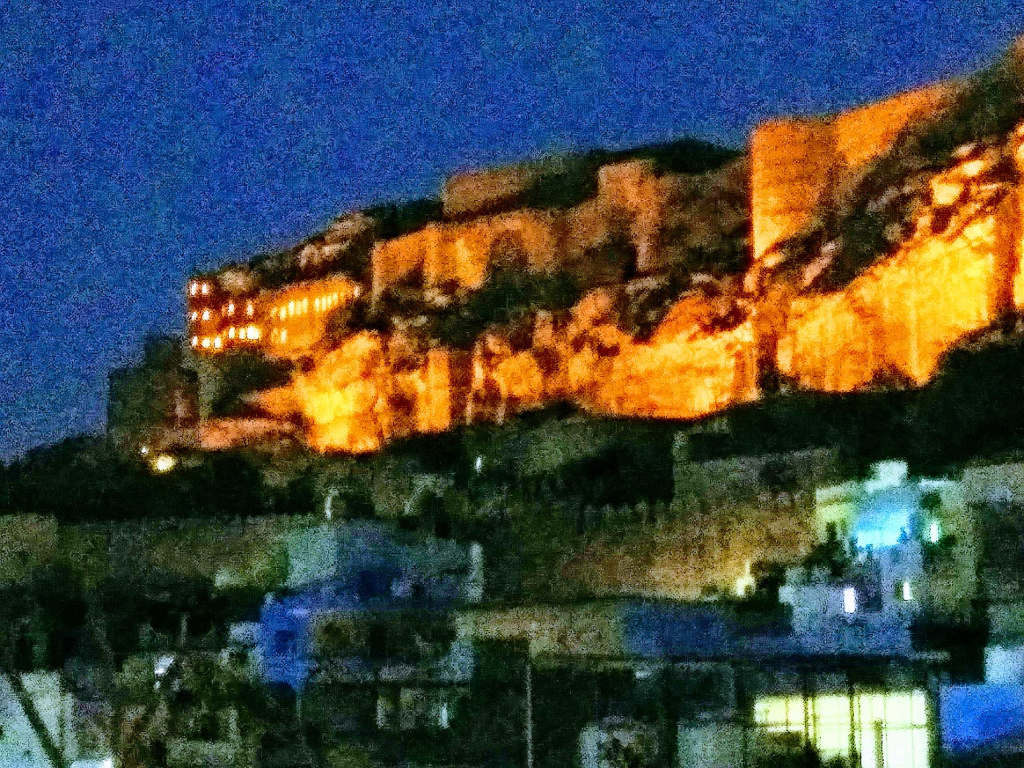
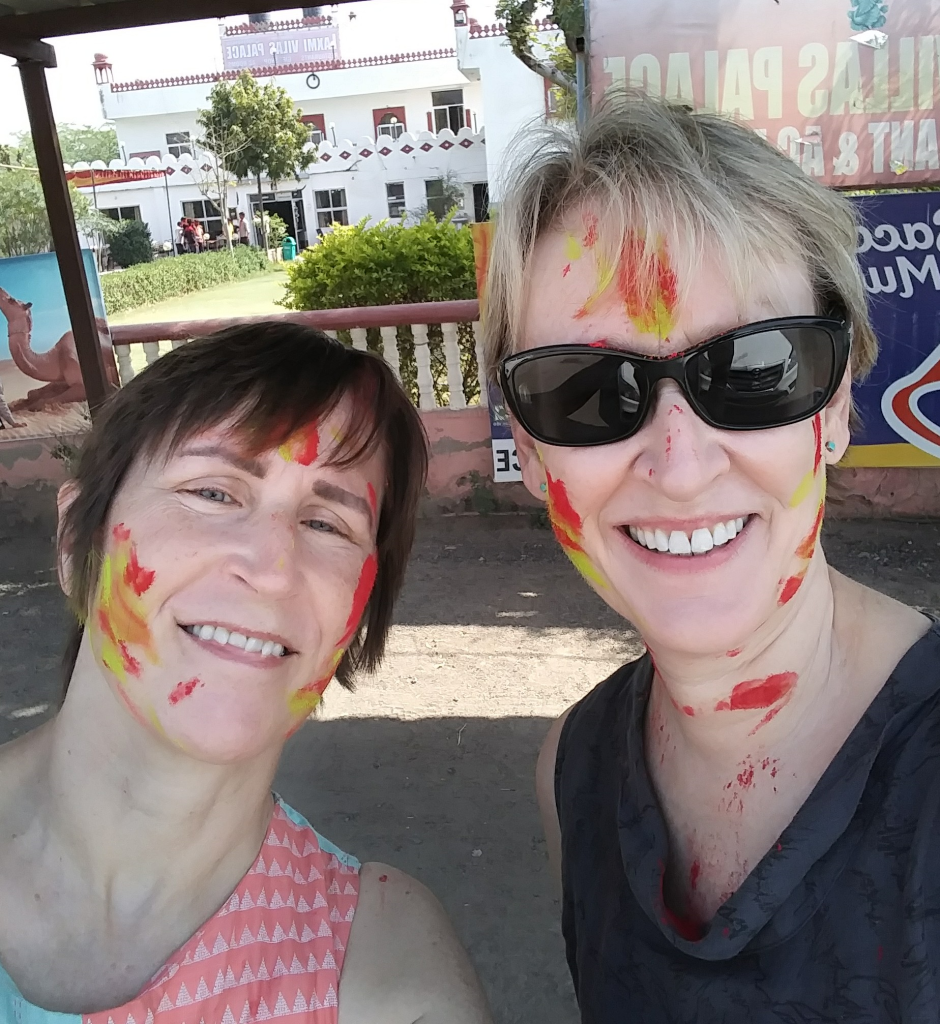
Here is the Fort in all its (blurry LG phone camera at nighttime) glory, photo taken from the rooftop restaurant at our hotel. Jodhpur is sometimes called the “Blue City”. Many homes are painted blue, supposedly because they are Brahmin homes and blue is the color associated with Brahmins. I don’t understand the caste system enough to write about it. Caste was made illegal by the Indian Constitution of 1950, but many aspects of caste remain important in India today.We got Holi-ized. Thanks for coming Julie!!

 A Northwesterner in North Bengal
fantastic post and pics!!!
LikeLike
Thanks daught!
LikeLike
Great pics! And wonderful visit. Thank you!
LikeLike
Thanks Julie, and thanks Mary for the great pics and entertaining descriptions!
LikeLike