The Moo-ment You’ve All Been Waiting for…

…because who can resist a cow pun?

As you no doubt know, cows are a sacred animal in Hinduism, symbolic of the divine and of the abundant generosity of nature. As a result, they are “protected” in the sense that they are never slaughtered or eaten — at least by Hindus. Since some 80% of Indians are Hindu, the cow occupies a special position in Indian culture. This translates out in a number of different ways. It means, for example, that it is difficult to purchase beef in any market — I know it is “available” in some areas (i.e. predominantly Muslim areas) but I have never – not once – seen beef in India. McDonald’s exists in India, but Big Macs do not. And since Muslims do not eat pork, pork is also not easily available in India. (And since neither Hindus nor Muslims drink alcohol, alcohol is also not easily available in India — although it is much more available than beef or pork.) So what to get at McDonald’s if not a Big Mac? How about a chicken Maharaja Mac, or a McAloo Tikki (sandwich with a fried potato and peas patty), or a McSpicy Paneer sandwich?
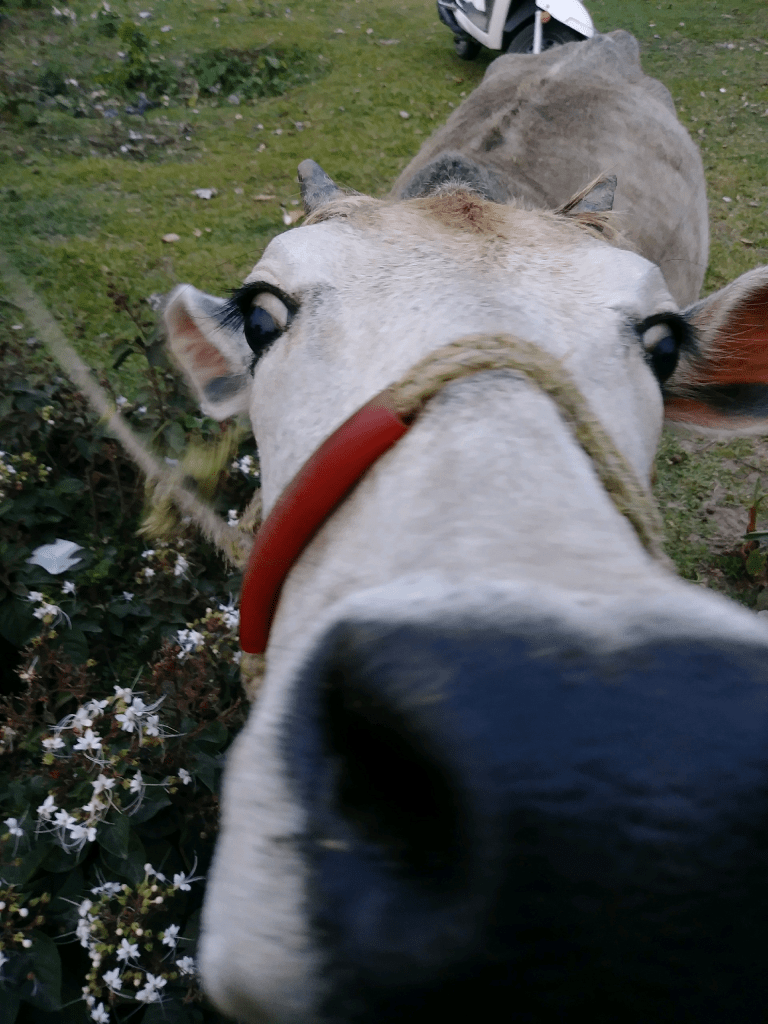
Once this lovely lady figured out I was not edible, she went back to her flowers.

The veneration of cows is most noticeable not from the absence of beef, but from the presence of cows on the roads. I see many (many!) cows each day here and so I’ve had more occasion to think about cows in the past couple of months than I ever have before. In particular, I think about cows on roads.
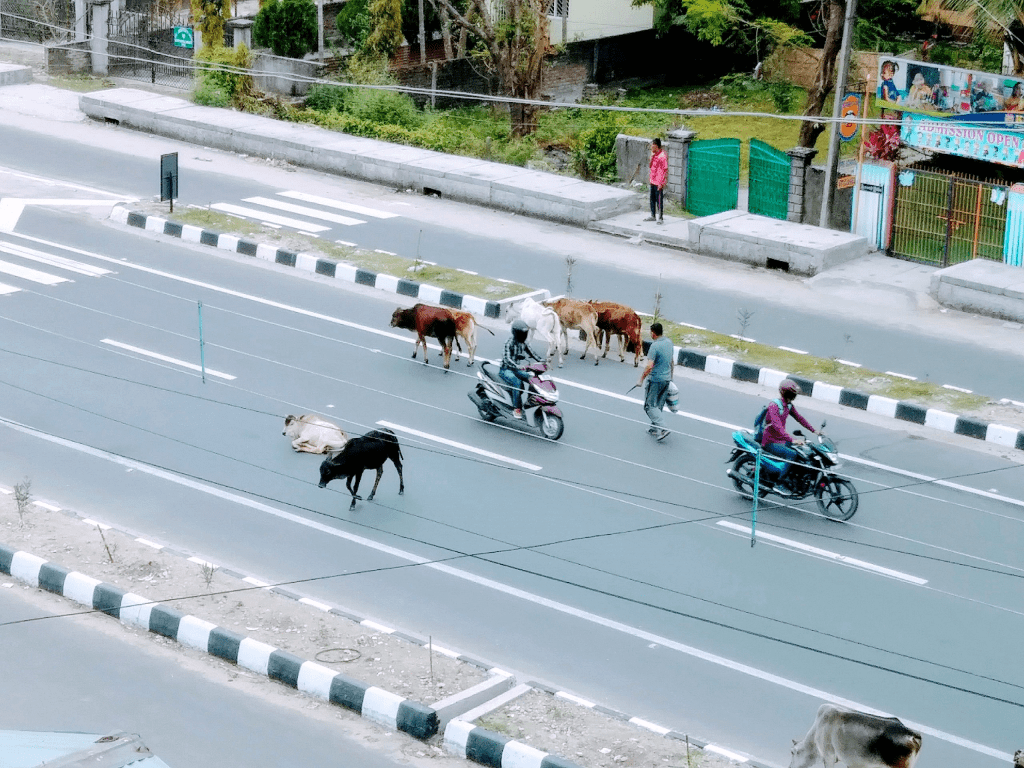
This is a typical view from the window of my flat.
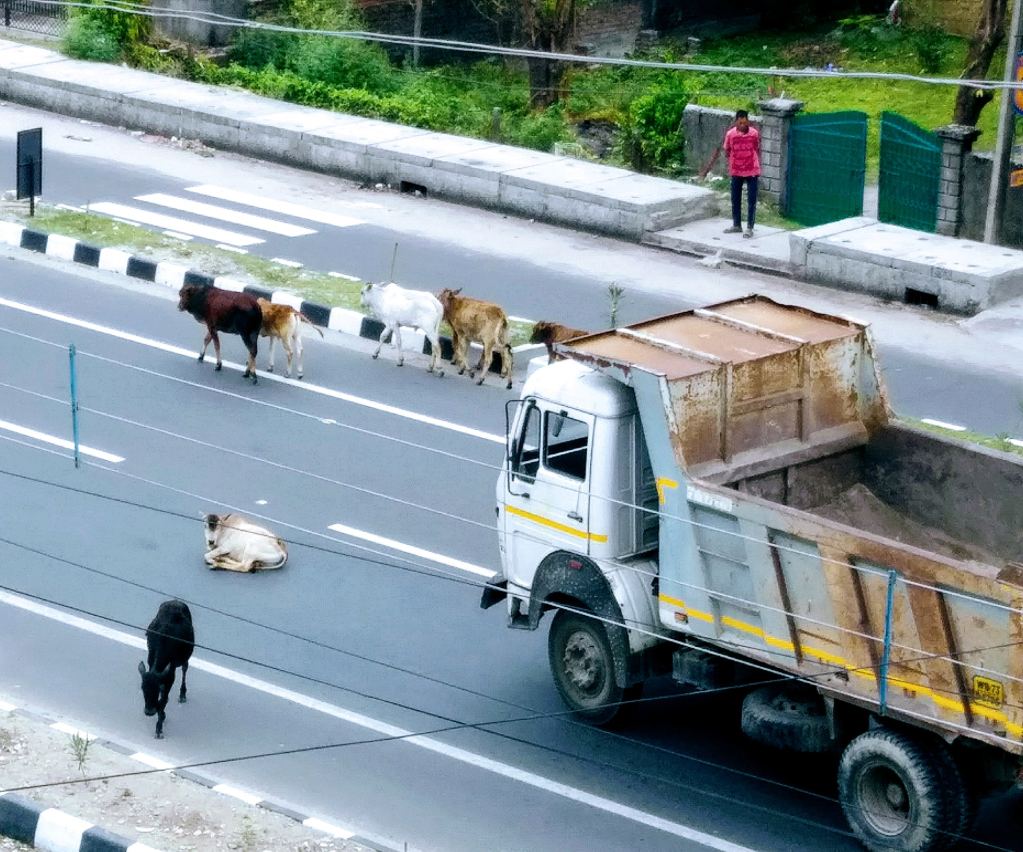
The cows seem absolutely and completely oblivious to the vehicles. This picture shows, much to my surprise, that this is not actually the case. The cow in front of the truck has turned its head slightly in the direction of the truck, apparently (can we assume?) aware of its looming presence. (Compare to previous photo!)

I always expect the cows to move out of the way of vehicles, which just shows how inexperienced I am. A cow at rest remains at rest; a cow in motion at a constant velocity remains in motion at a constant velocity. The drivers know Newton’s first law and plan accordingly. That is what happened in the scene above (the truck went around) though unfortunately I do not have the “after” picture. Goats, by the way, do not follow Newton’s law and they can be a challenge to drivers — changing direction and speed capriciously, though not in any discernible reaction to the vehicle. Dogs are okay because they are smart enough to get out of the way of on-coming vehicles (usually).

Cows roam around all day. At night they go home. So although they seem like “stray” cows, they do have homes. Their owners let them out early the morning, they forage for food all day (slim pickings, as you can see in the photos above) and then get rounded up at night.
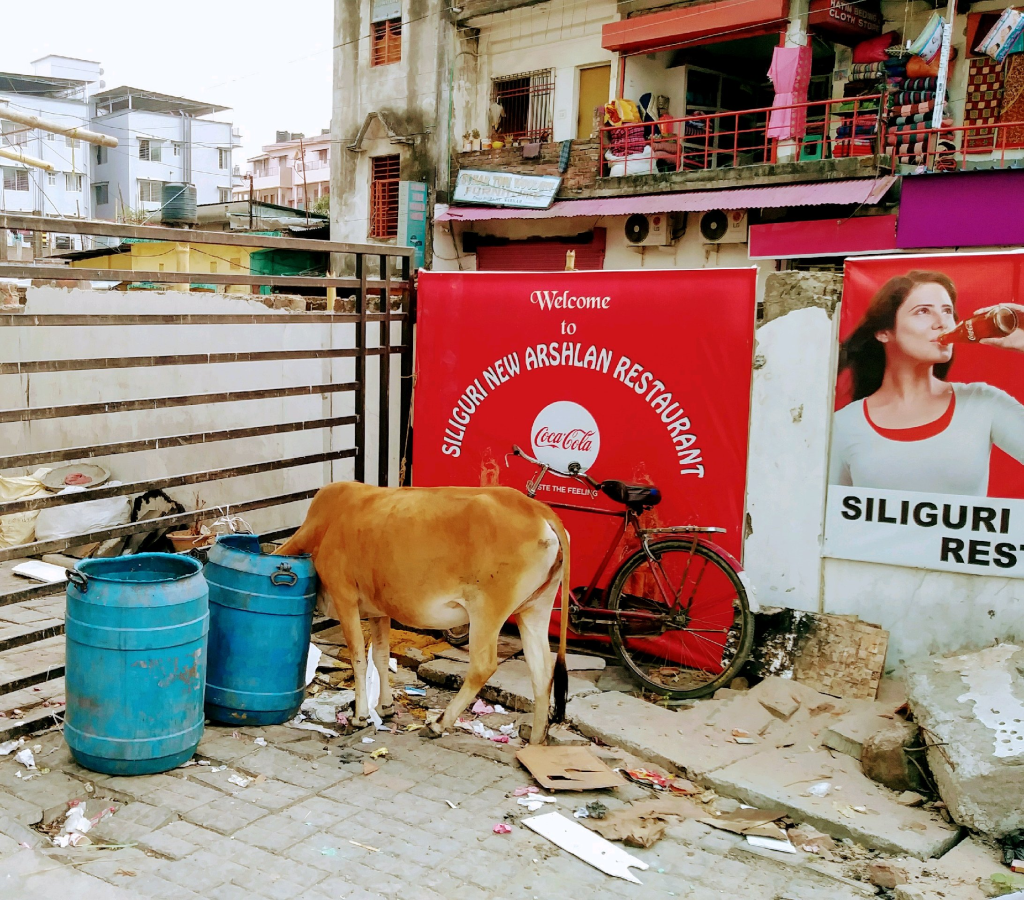
Foraging

Obviously, some places are better than others for foraging. The cows who live close to campus for example, have a much better “spread” than those who live in my neighborhood. Apparently they are not really supposed to be on campus — the campus security personnel can round them up and put them in a holding pen and only release them to their owners once their owners cough up a couple hundred rupees. I’ve never seen a holding pen much less cows in a holding pen!

The cows are sacred, but also valuable because they provide milk. The cows provide milk, mind you, the bulls do not. So the bulls are mostly useless unless they are needed for plowing or you want more baby cows. But they can’t be killed, so what to do with them? From what I’ve heard, people mostly abandon the bulls — and they are left on their own to just forage for themselves. It is a mitzvah (brings good karma, if I may recklessly mix religious tenets) to feed cows, so people will often put out kitchen scraps and other stuff for them to eat. (I don’t buy “local” — raw — milk. Although it is easily available, you can’t help but wonder what these gals have eaten!)
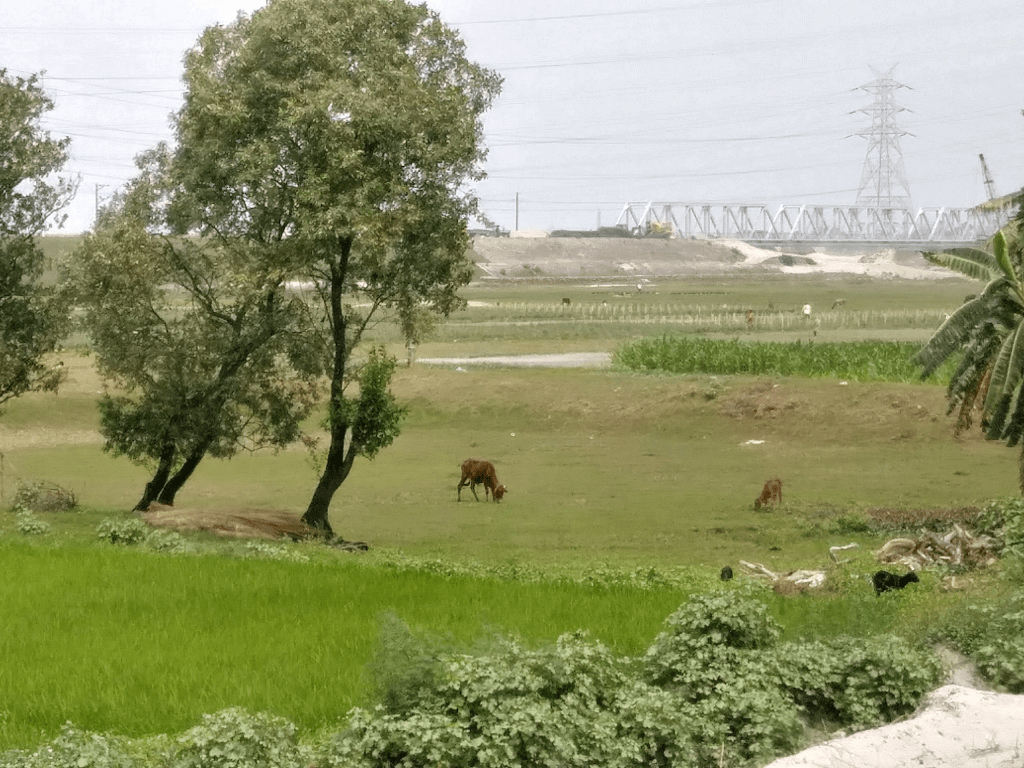
In the foreground is a paddy field planted about a month ago — beautiful green.

It seems like it might be dangerous to be wandering around amongst a bunch of cows and bulls, but they all seem pretty docile. A while back I was walking along and a cow was walking toward me. I wondered, “Who has right of way?” Suffice it to say, it was not me.
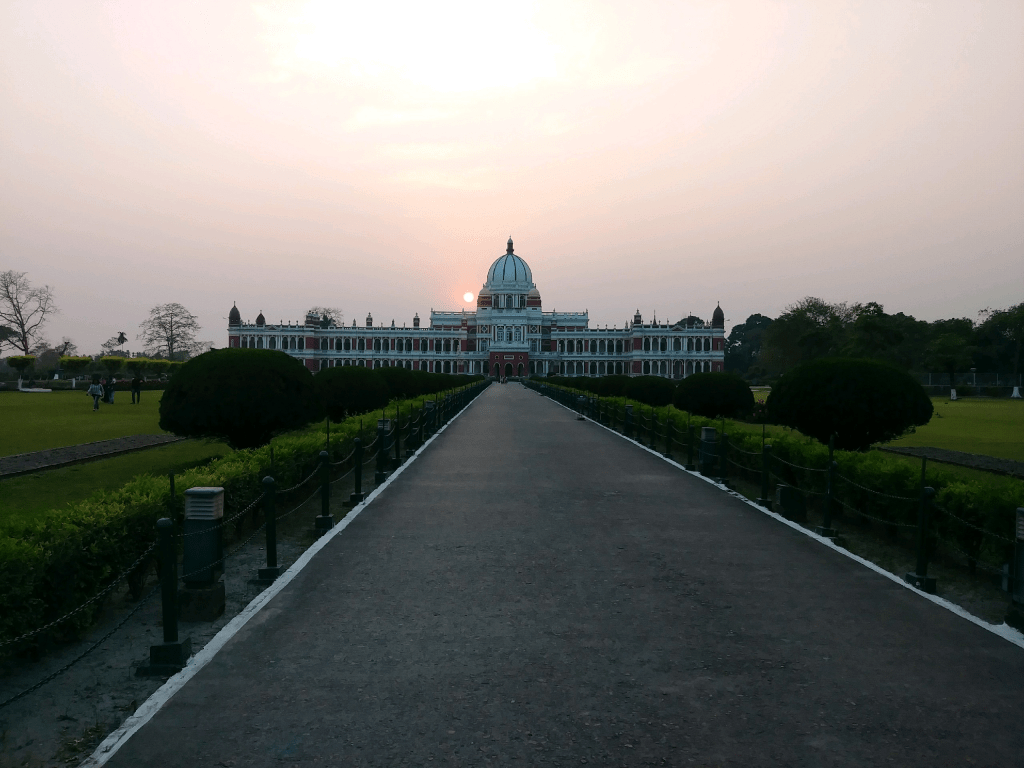
Coochbehar

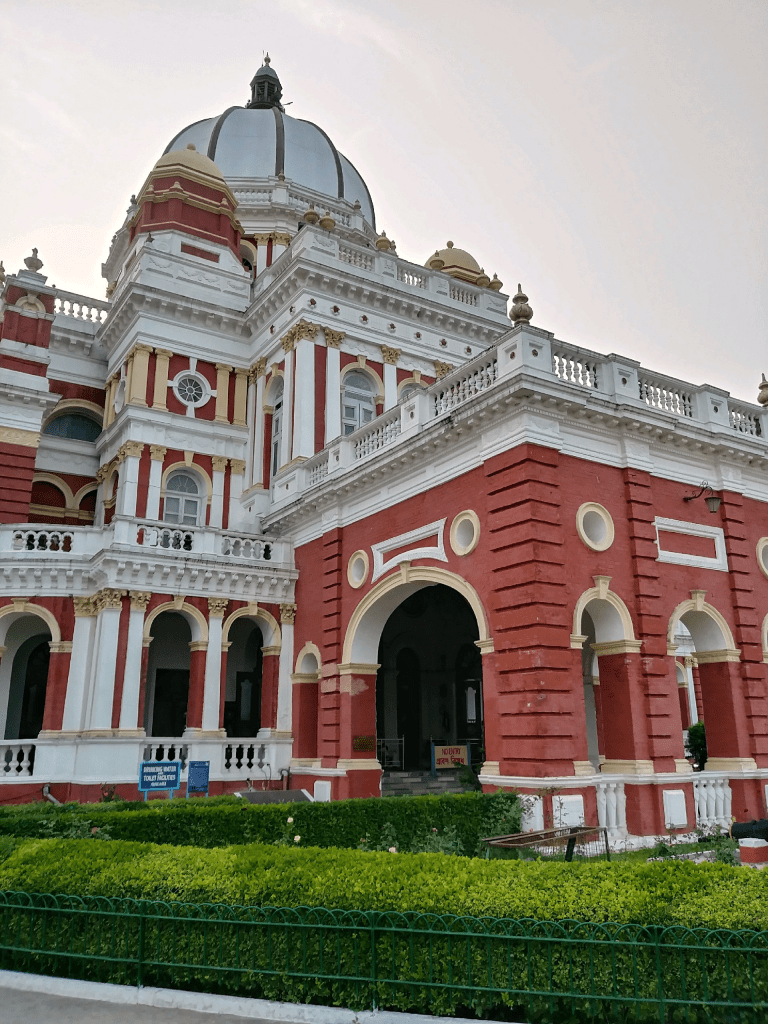
A few days ago I went to Coochbehar, the capital of the former princely state (of Coochbehar) in North Bengal, about 100 miles east of Siliguri. This is the “Rajbari,” which literally means “King’s House,” built in the late 1880s, supposedly on the model of Buckingham Palace. The ruling family, the Narayans, fell on hard times, failed to produce male heirs, and were not financially able to maintain the palace, and so unlike in Jaipur, where the remnants of the former royal family still reside in part of the City Palace, the Rajbari was not maintained and many of the artifacts it contained were looted. Sometime in the early 2000s, (I think) it was refurbished and is under the conservation of the Archaeological Survey of India. It’s now a museum. Guess what — the museum is closed on Fridays. Guess what day I was there — Friday!
The main entrance, up close — it’s grand! The red and yellow color scheme is replicated on many government buildings and old residences throughout the city, which lends a charming air.
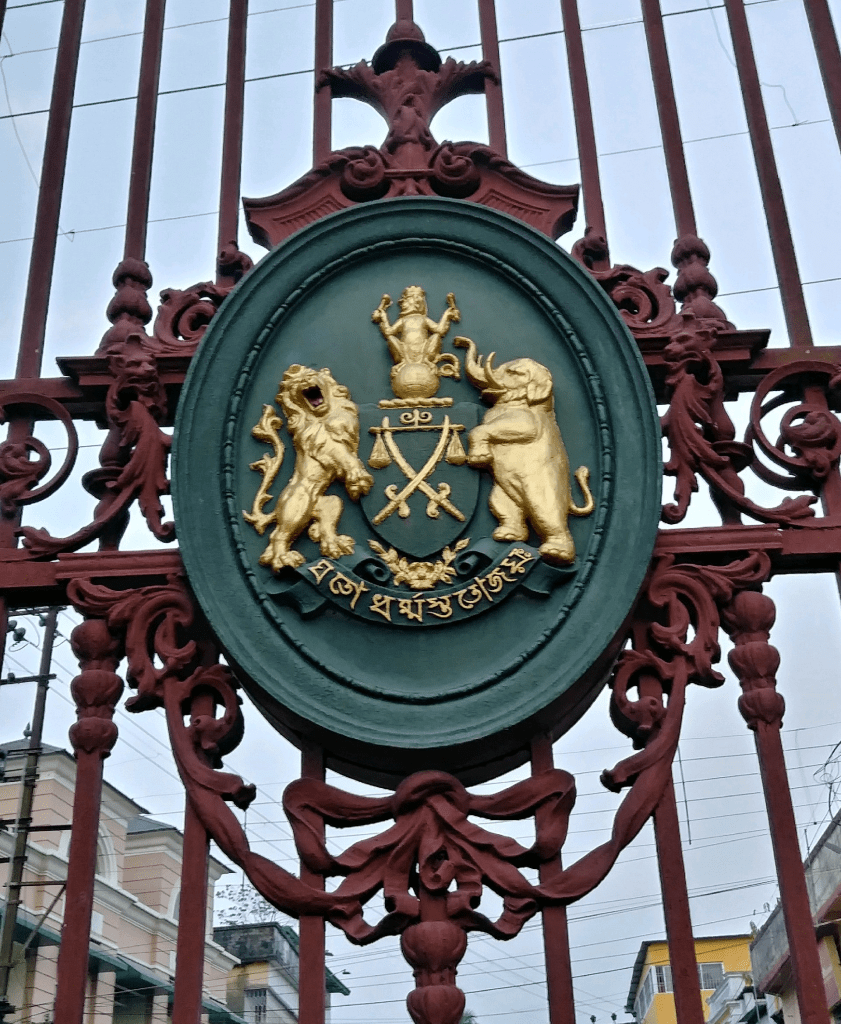
The royal coat of arms — Lion and Elephant!
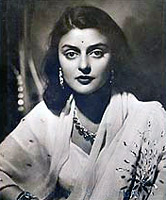
Gayatri Devi, the former Princess of Coochbehar. Do you recognize her? She was a renowned beauty, married the Maharaja of Jaipur and became Maharani Gayatri Devi.
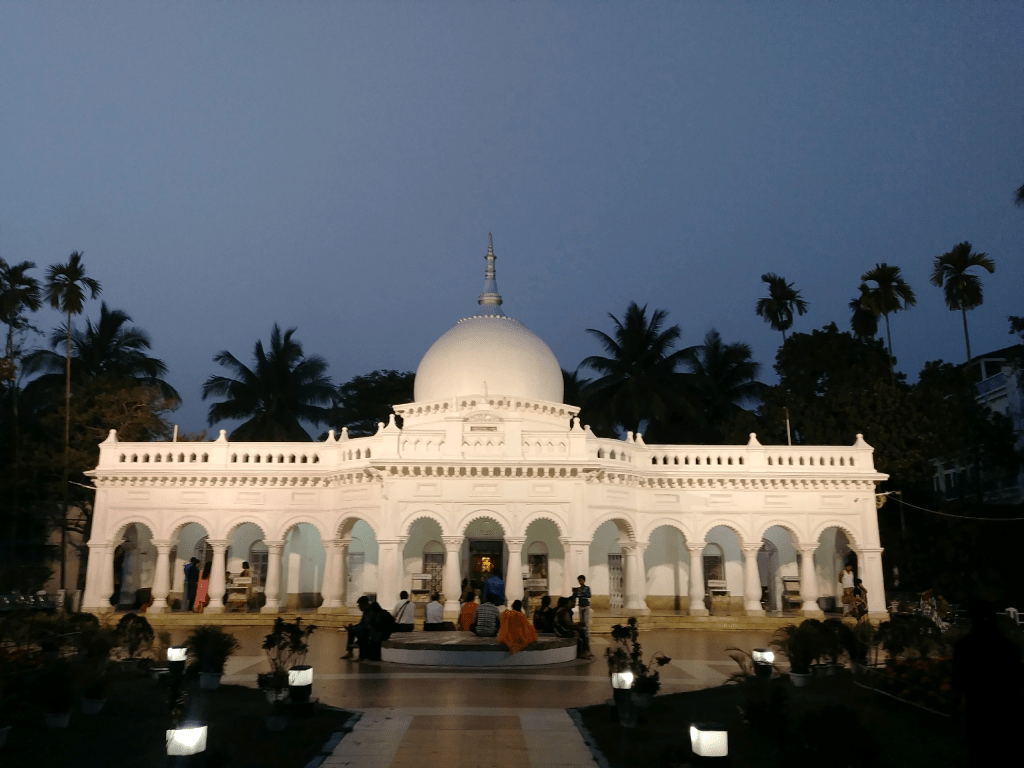
The Madan Mohan Temple in Coochbehar — it’s a Krishna temple — Madan Mohan is one of the 108 names of Lord Krishna.
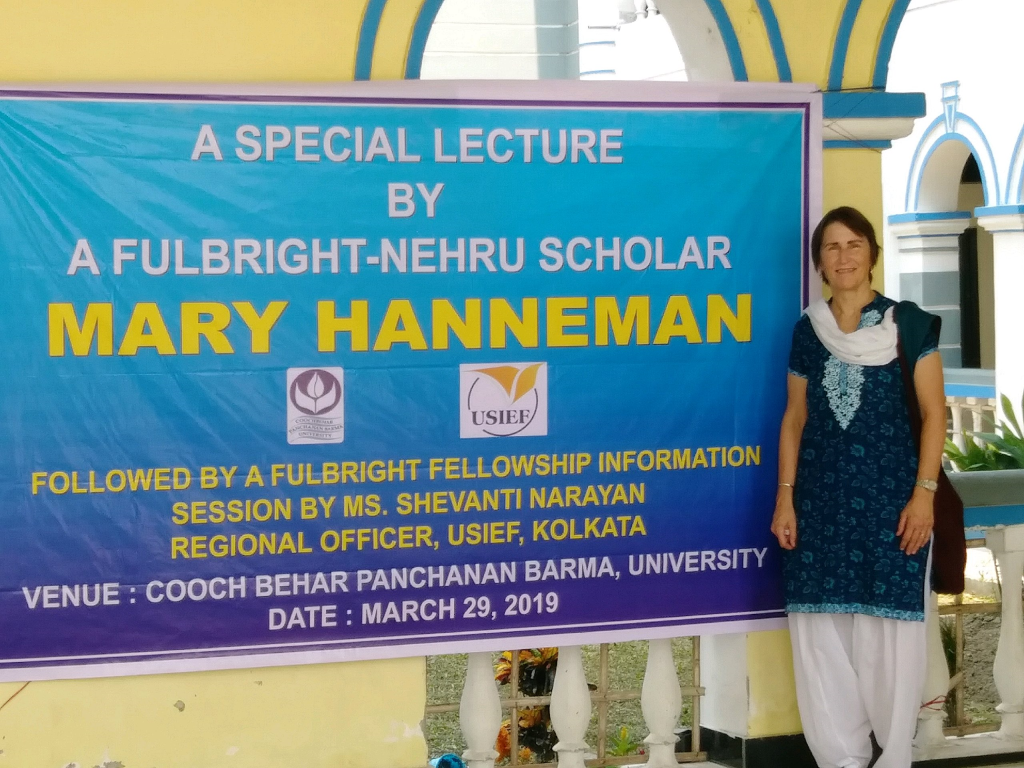
I gave a presentation at Coochbehar Panchanan Barma University — and they made this huge sign! My name in 1000 point font! I was pretty impressed with myself! In fact, these kind of signs are pretty common in India — no, not signs with my name on them (not yet, anyway), but big signs that announce all manner of events and so on. I was thinking of asking if I could have the sign, but common sense kicked in for once — what would I do with it? Wallpaper my living room? (Maybe if it had a headshot on it…)
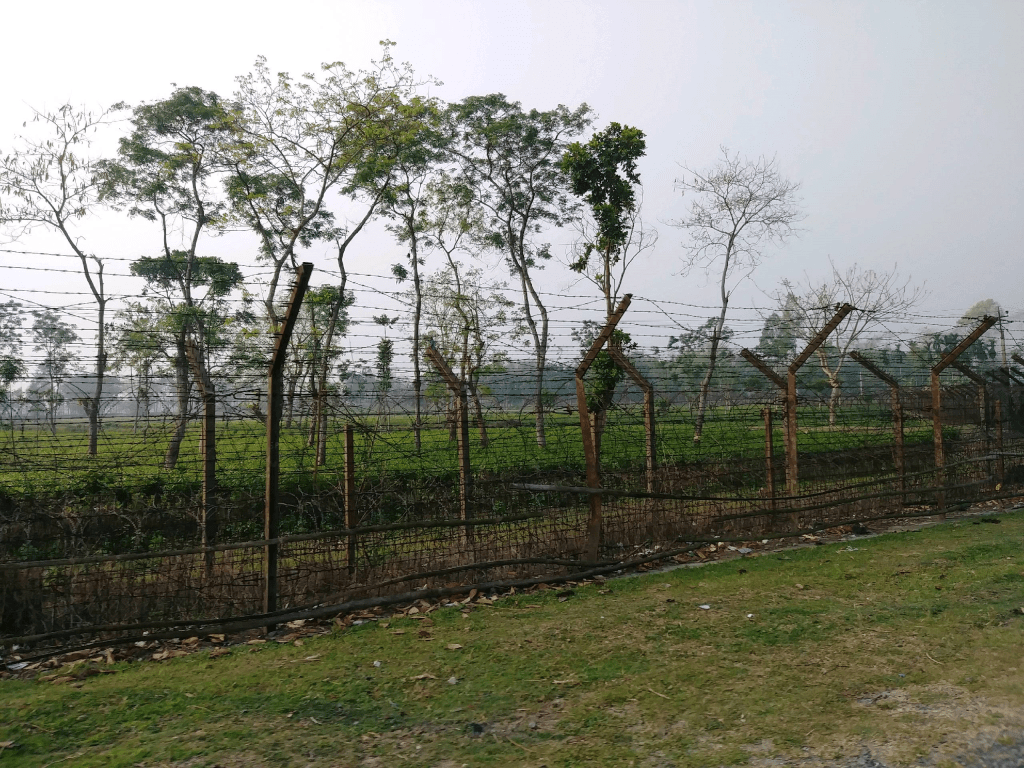
This picture fascinates me! This is the India-Bangladesh border! The road between Siliguri and Coochbehar skirts the border at one point for about 2o kilometers. As you can see, barbed wire! And yet there are gates that are opened each day for local residents to go back and forth because (it’s complicated and I don’t fully understand it) when the border was hastily drawn in preparation for independence (and partition) in 1947, the line went right through existing villages. And so there are some Bangladeshi enclaves within India and some Indian enclaves within Bangladesh — making those who live in the enclaves essentially stateless. As well, some people live on one side of the border while their farmlands are on the other side.

From Tea Garden to Tea Cup

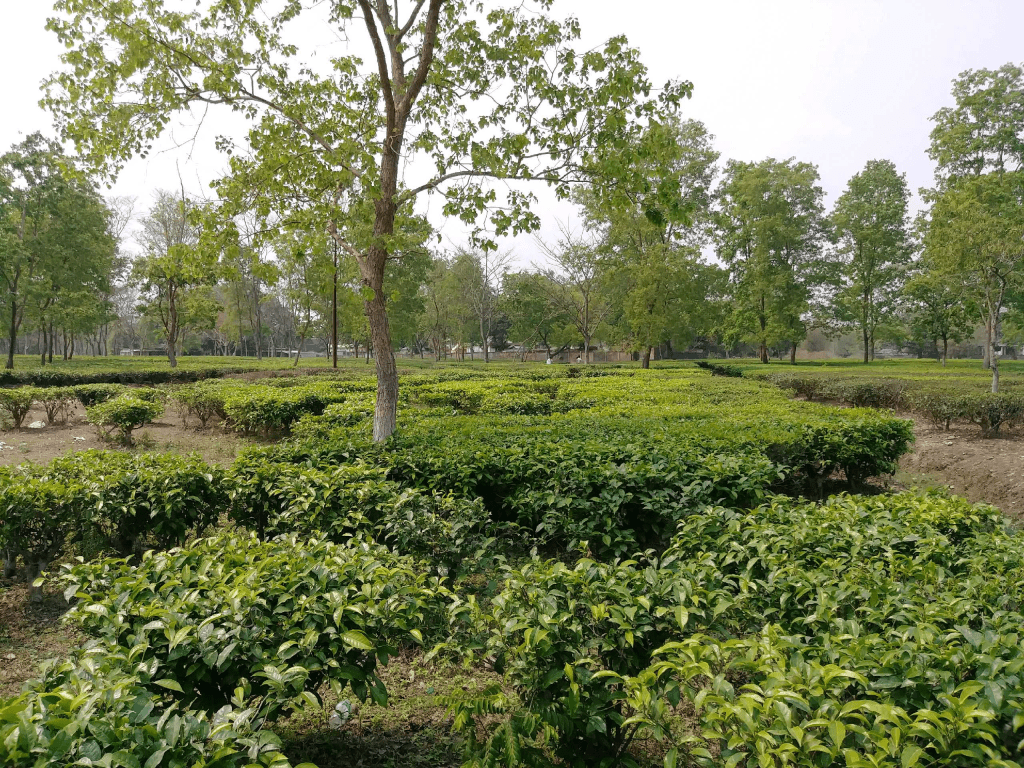
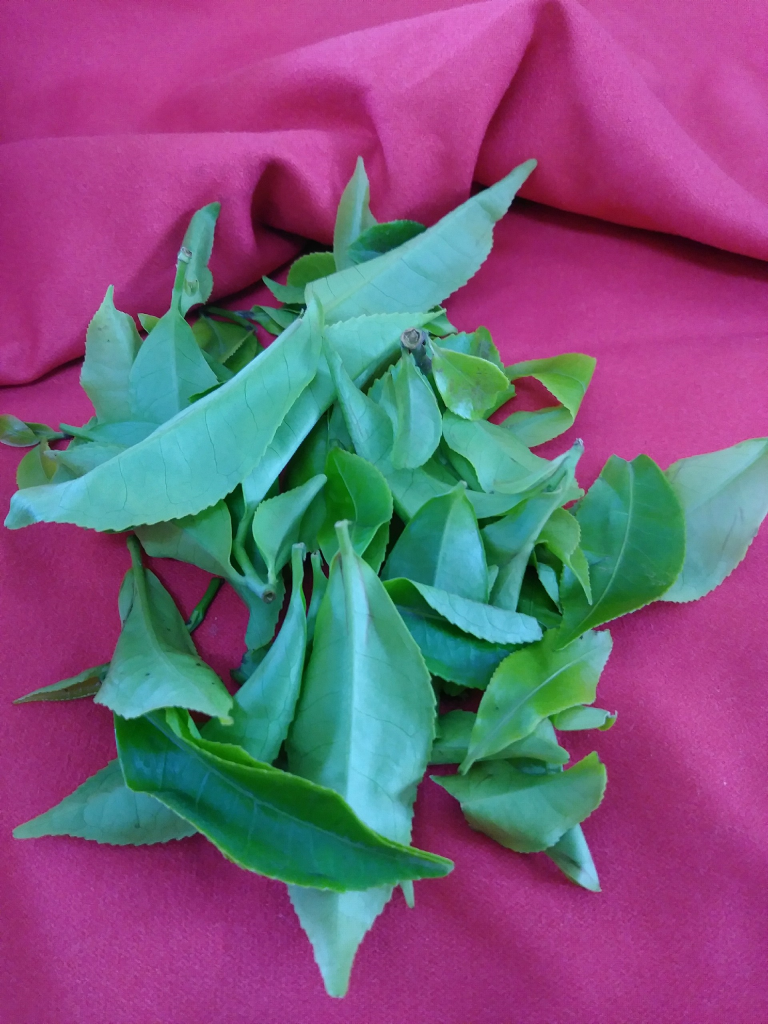
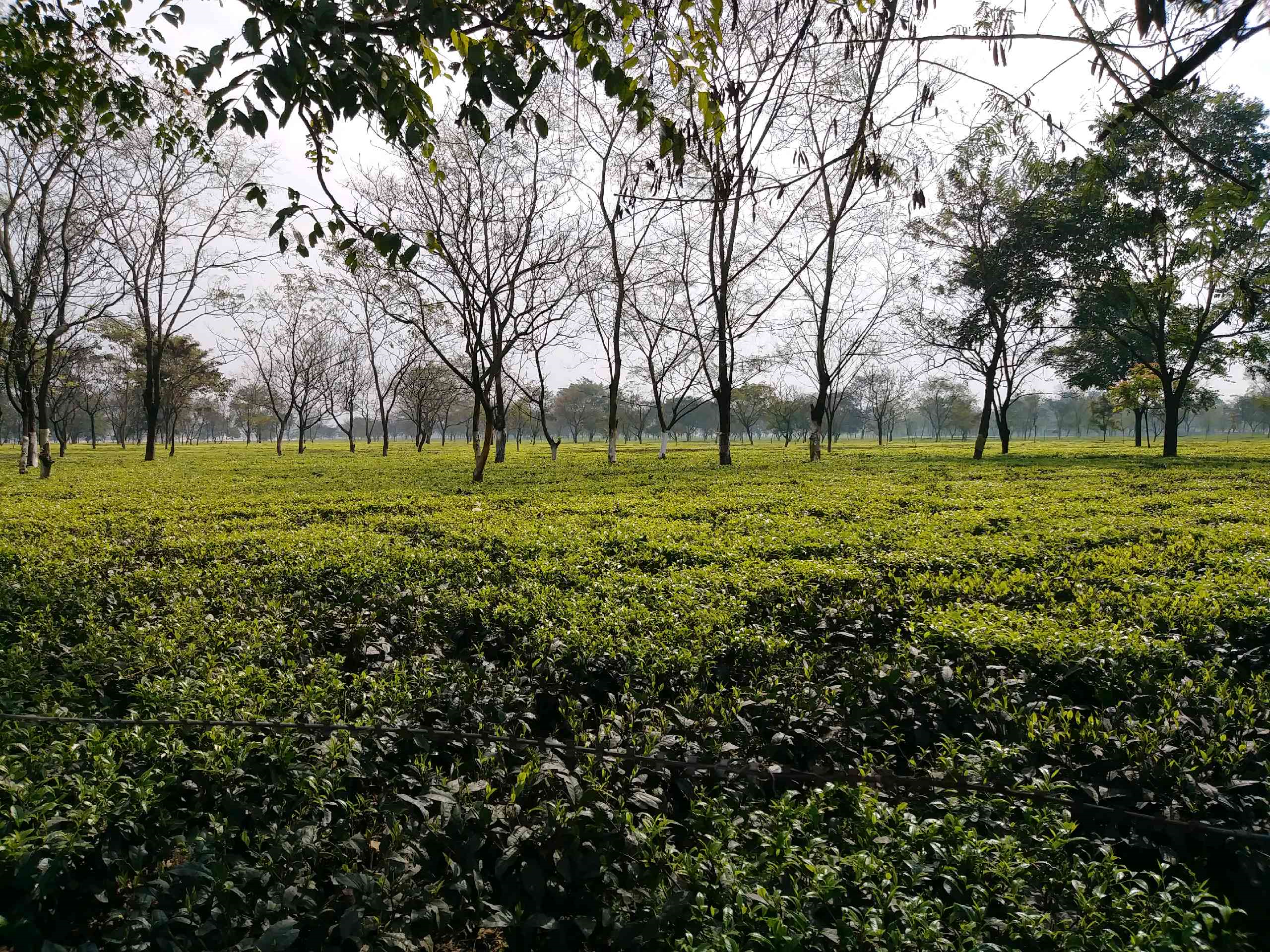
This is the tea garden on the University of North Bengal campus. I went there the other day and surreptitiously plucked a handful of leaves… I wanted to try to process them myself and make my own cup of tea!
The aroma of the garden and of these leaves is quite heavenly — sweetly floral but subtle and not at all cloying.
These are the freshly plucked leaves — only about 3/4 of a cup.
Only the top three leaves of the sprig are supposed to be picked, but since I was stealing the leaves, I didn’t feel I could take the time to be quite so discriminating…
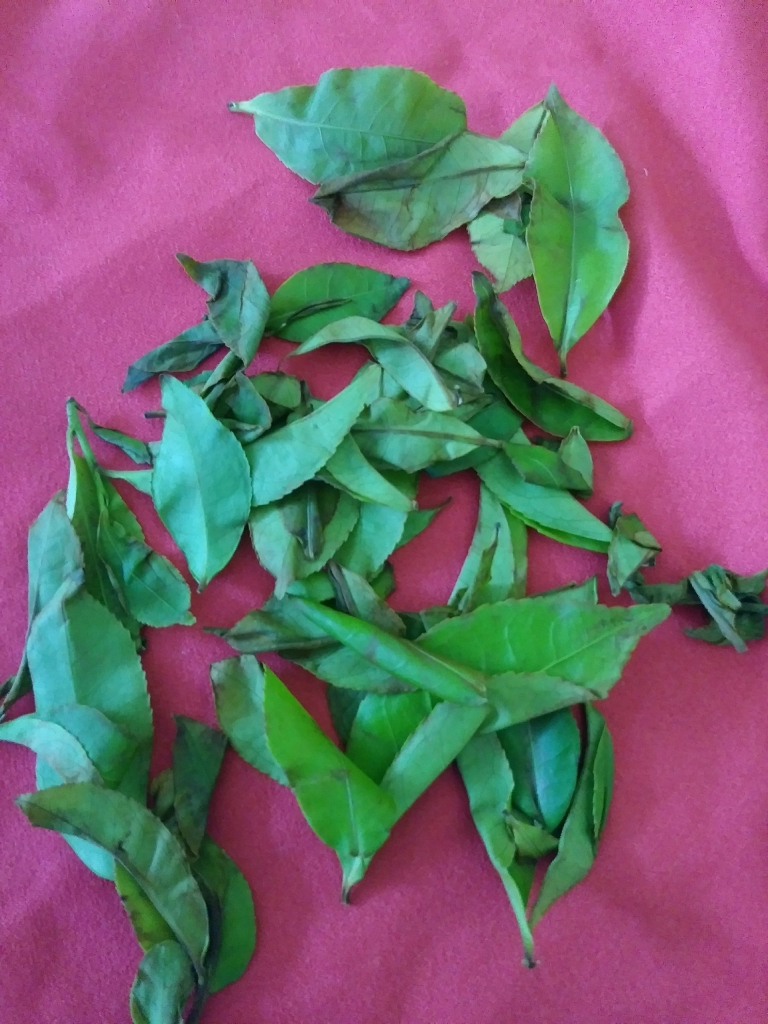
The leaves are allowed to “wither” for a period of time to lose some of their moisture content.
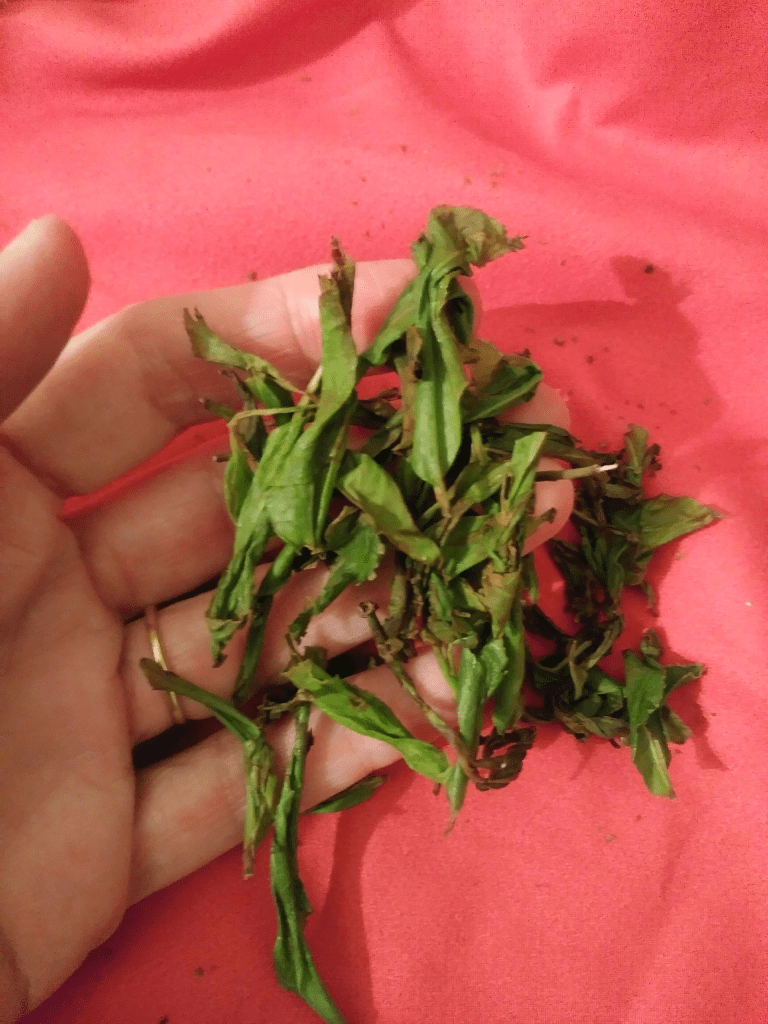
After withering, the leaves are “rolled,” to help break down the cellular structure and release the juices. I just rolled these with my hands.
Then comes the “fermentation” or “oxidation” stage. The leaves are allowed to dry for a while; during this stage the enzymatic processes occur, releasing the various compounds in the leaf, including chlorophyll, tannins and caffeine. I left these sitting out overnight. In making green tea, this process is eliminated and the leaves go from the rolling stage to the fixation stage (see next photo). Oolong teas are partially fermented, that is, they are allowed to ferment or oxidize for a while, but not fully as with black tea.
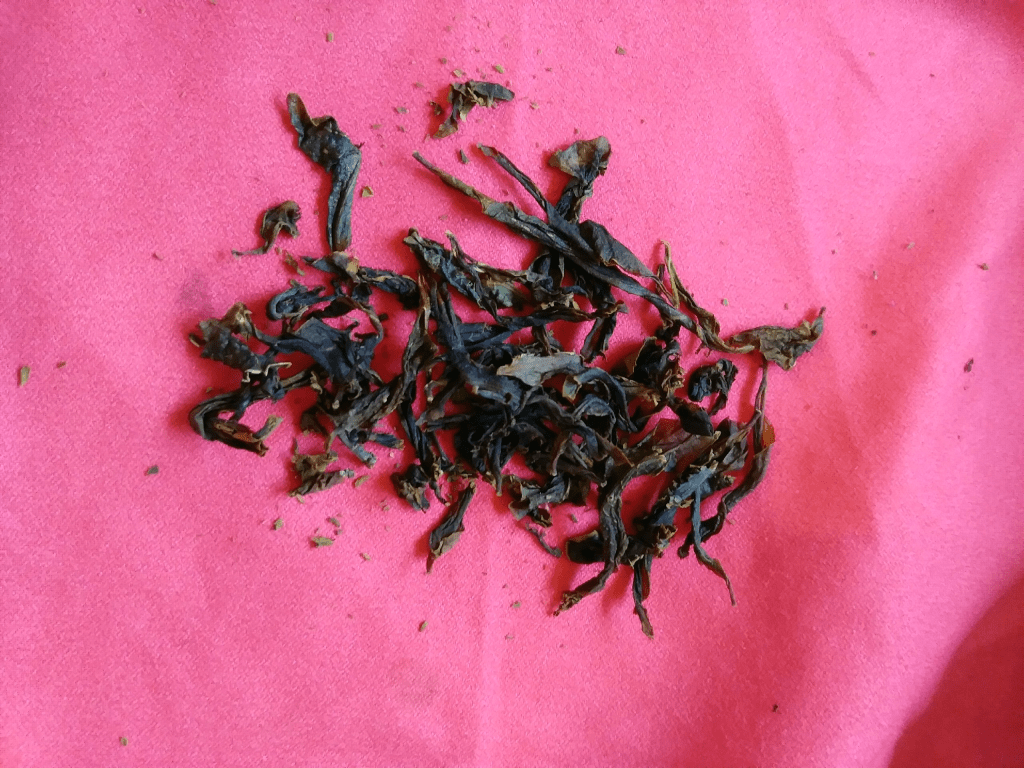
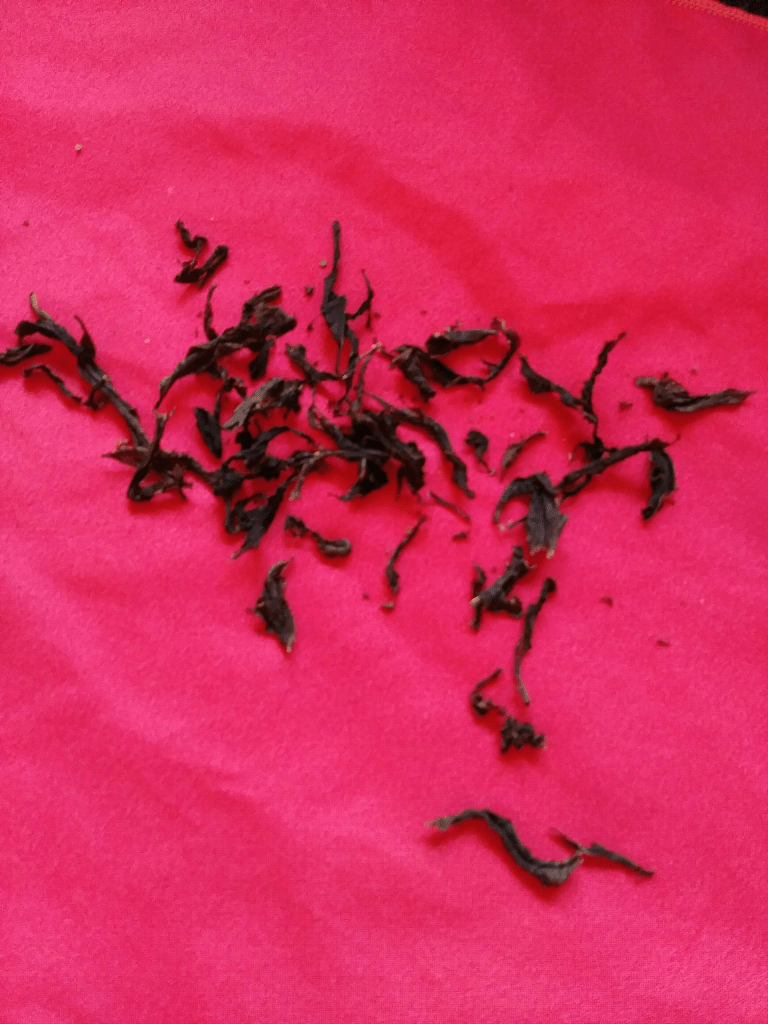
The last step is “fixation,” stopping the enzymatic processes by heating up the leaves. This can be done in a pan on the stove, or in a low-temperature oven.
Here’s my cup of tea! My neighbor Sarbari stopped by and I gave her a sample. Her considered opinion: “Not good and not bad.”

Julie’s Visit

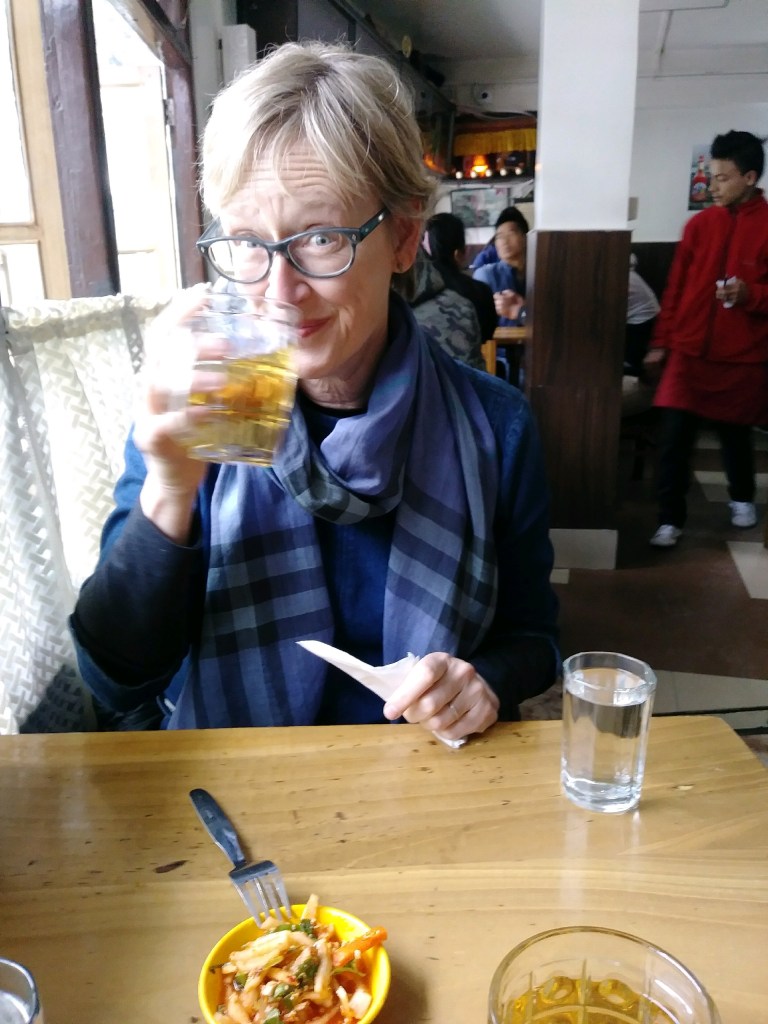
My friend Julie came to visit. Here are selected photos of our travels, starting out with an introductory picture of Julie enjoying a beer in a Tibetan restaurant in Gangtok, the capital of Sikkim.
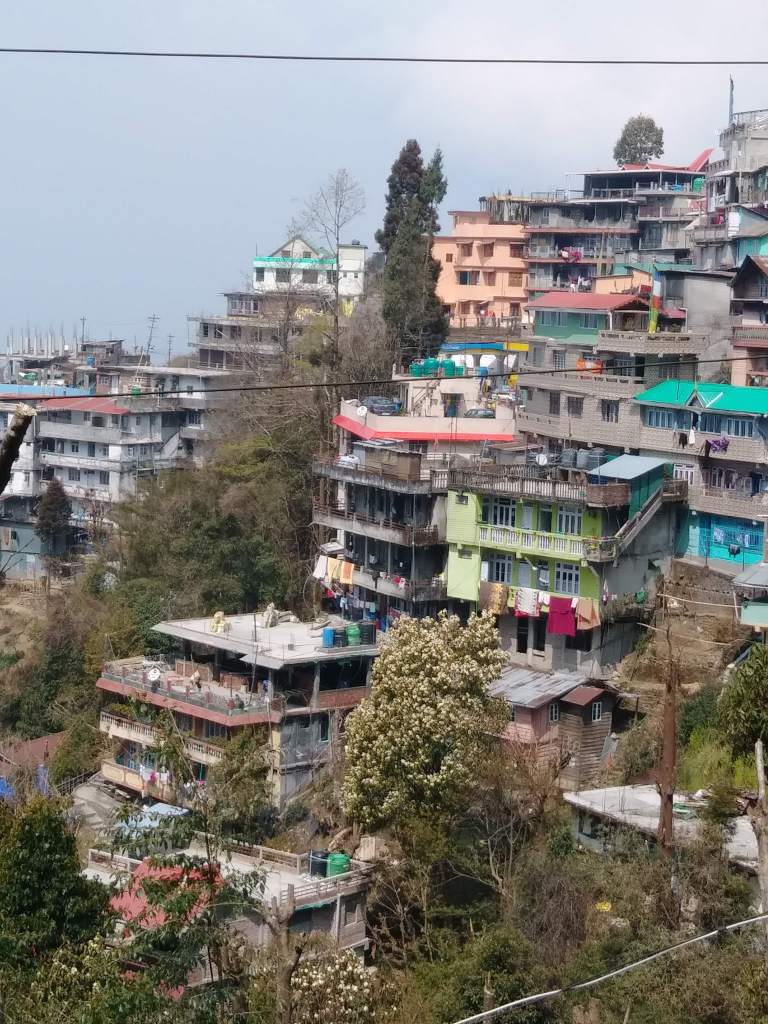
After hanging out for about a week in Siliguri, we hired a driver take us to the hills — Darjeeling. A “hill station,” Darjeeling is only about 40 miles from Siliguri, but it’s about a three hour drive, with hairpin turns and a climb in elevation from 400 feet to over 7,000 feet. Darjeeling, the “Queen of the Hills” was built up by the British in the 19th century, who used it as a place of respite from the intense summertime heat. In “Darjeeling: The Colorful History and Precarious Fate of the World’s Greatest Tea,” Jeff Koehler writes, “The town spread almost vertically along a semicircular ridge, with buildings plastered to the shelves of the hillside.”

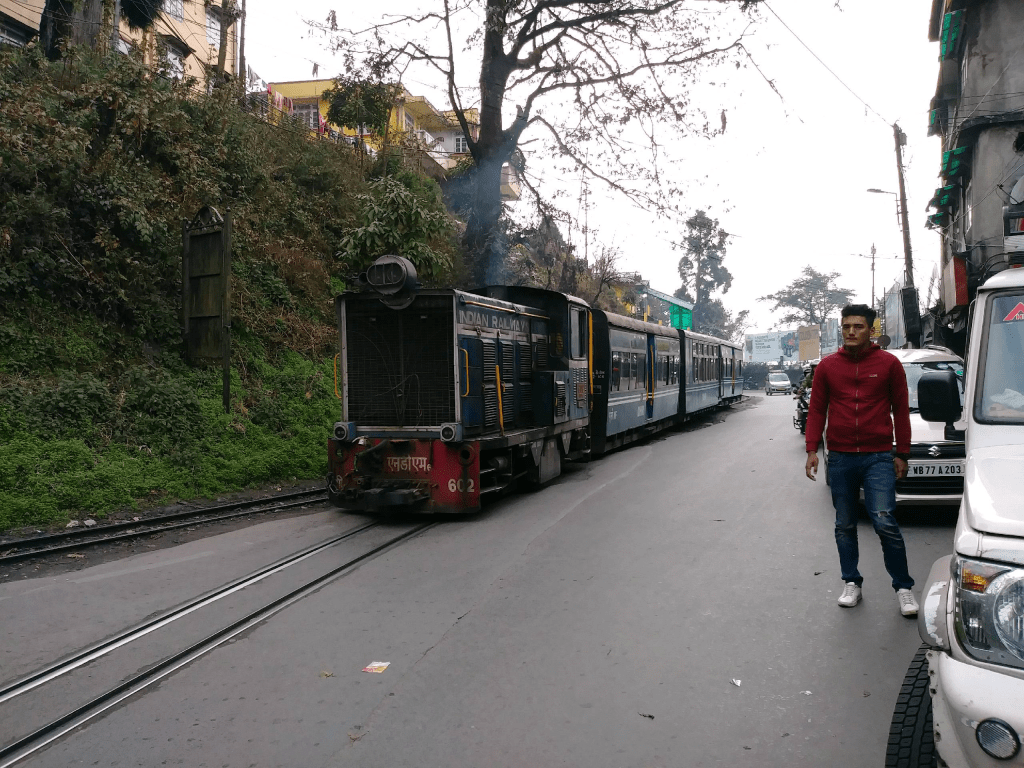
I finally, finally got to ride on the Darjeeling-Himalaya Railway. The railway was built in the late 19th century to take people from the plains — Siliguri’s sweltering summer heat — up to Darjeeling’s cool elevations, and to transport tea back down to Siliguri. The train and the tracks were in terrible disrepair for years, but parts have been refurbished and the DHRR is now listed as a UNESCO World Heritage site. A coal-powered steam engine pulls the train along the two-foot narrow gauge tracks, taking tourists on short “joy rides” in a 16 kilometer loop from Darjeeling to Ghoom Monastery and back. But the ride was not as magical or joyous as I imagined it would be: garbage was strewn along the entire route, and the sight of thick black coal soot belching into the atmosphere was distressing indeed.
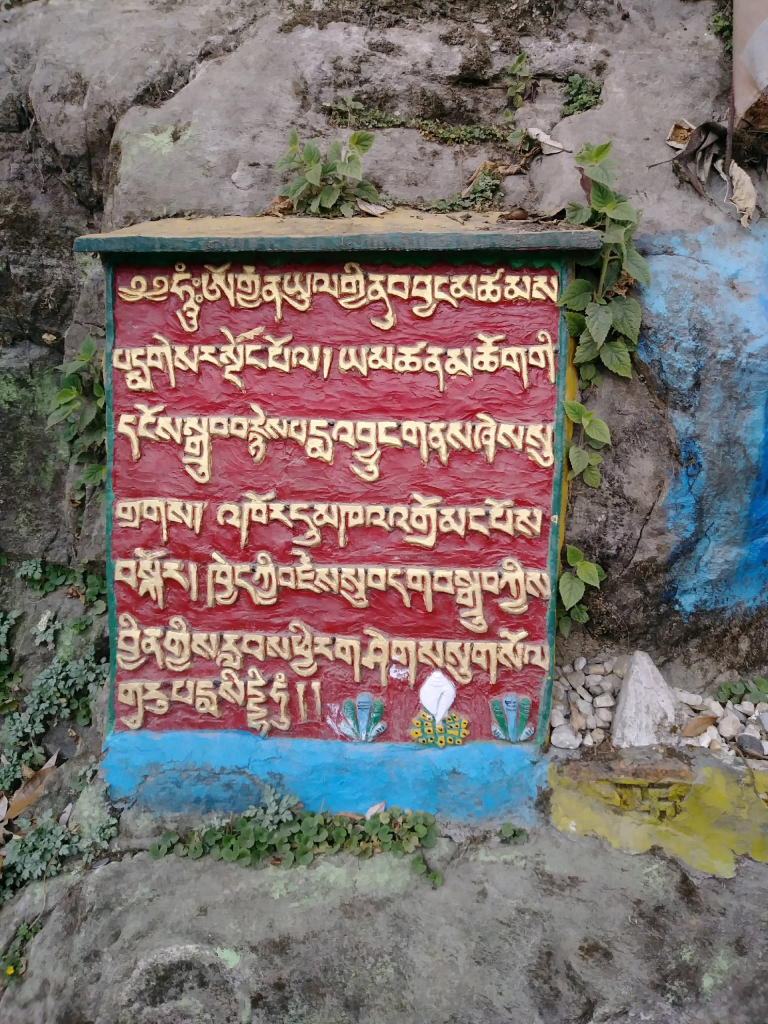
A Buddhist sutra in Tibetan script on a stone column near our Darjeeling hotel.
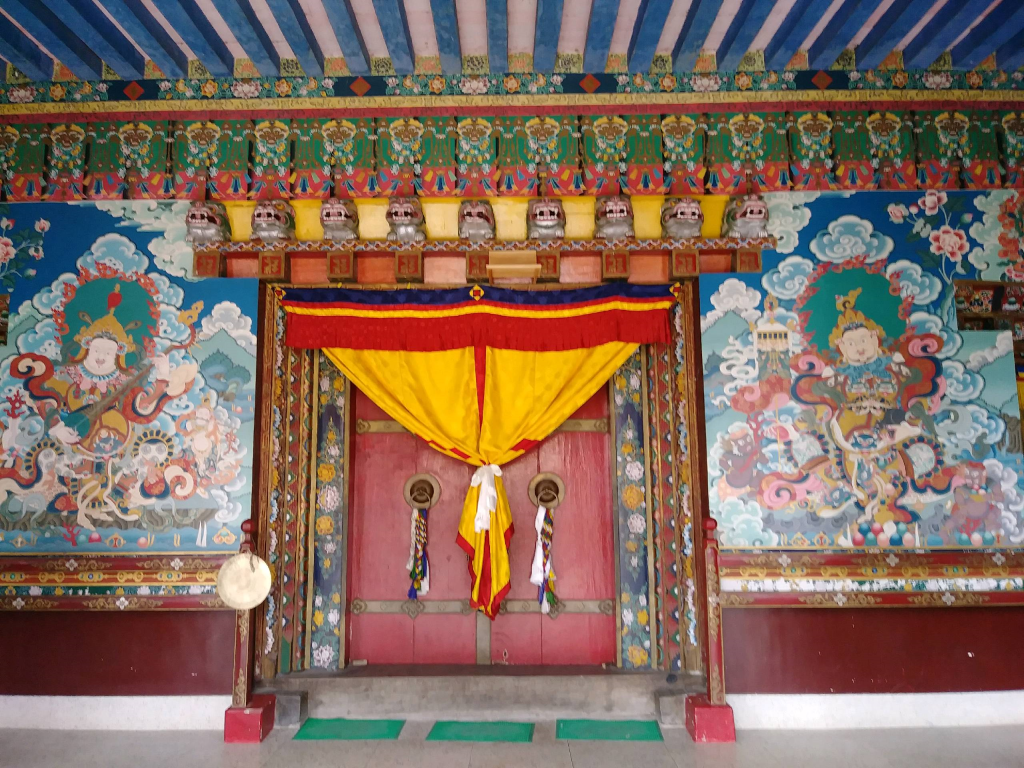
From Darjeeling we drove to Gangtok, the capital of Sikkim. (Make that “we were driven” — by a driver whose parents had fled Tibet in the early 1970s, as China tightened control over Tibet). On a morning walk we wandered onto the grounds of the Tsuklakhang Palace Monastery. It was our good fortune that a man engaged in walking meditation — circumambulating the temple to gain good karma, he said — called on a young monk to unlock the temple for us and we were able to explore the interior on our own. The picture shows the front entrance of the temple. Sikkim was an independent Buddhist kingdom until 1975, when by referendum the people of Sikkim voted to join India. (An interesting side note: in 1963 the last king of the Namgyal Dynasty married Hope Cooke, an American woman; she became the last Crown Princess of independent Sikkim.)

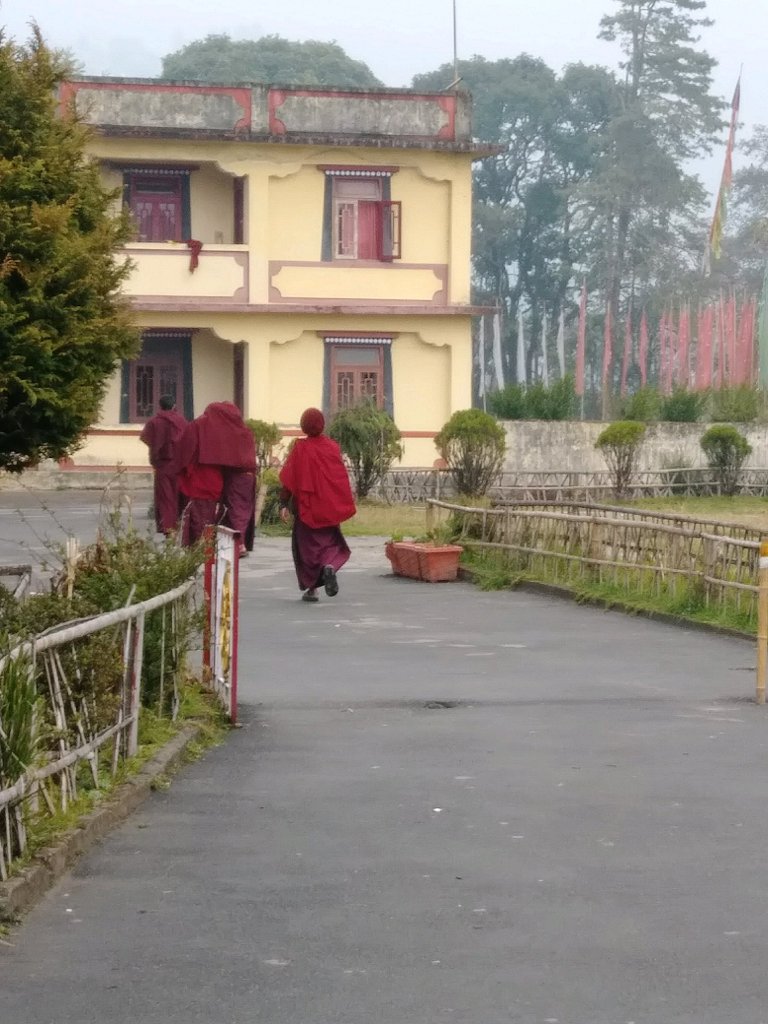
On the grounds of the Tsuklakhang Palace Monastery. The young novices are walking toward the dormitory. Behind the gray cement wall and the red and white prayer flags is a big soccer field for the boys to play on — boys will be boys and boy monks will also be boys!
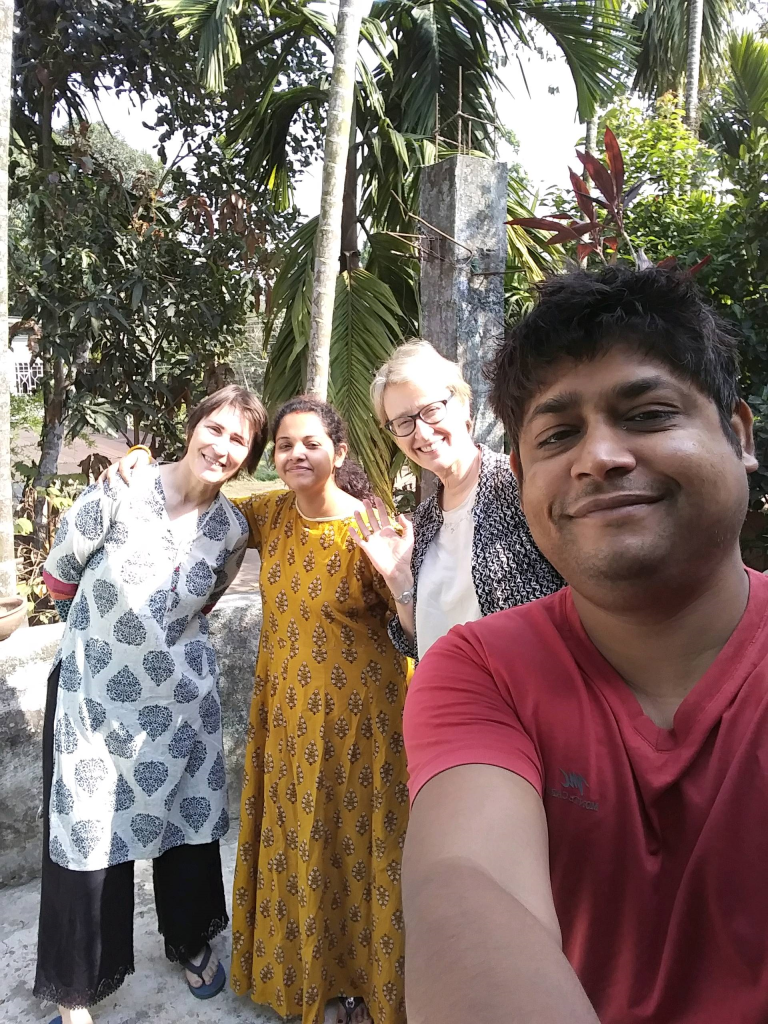
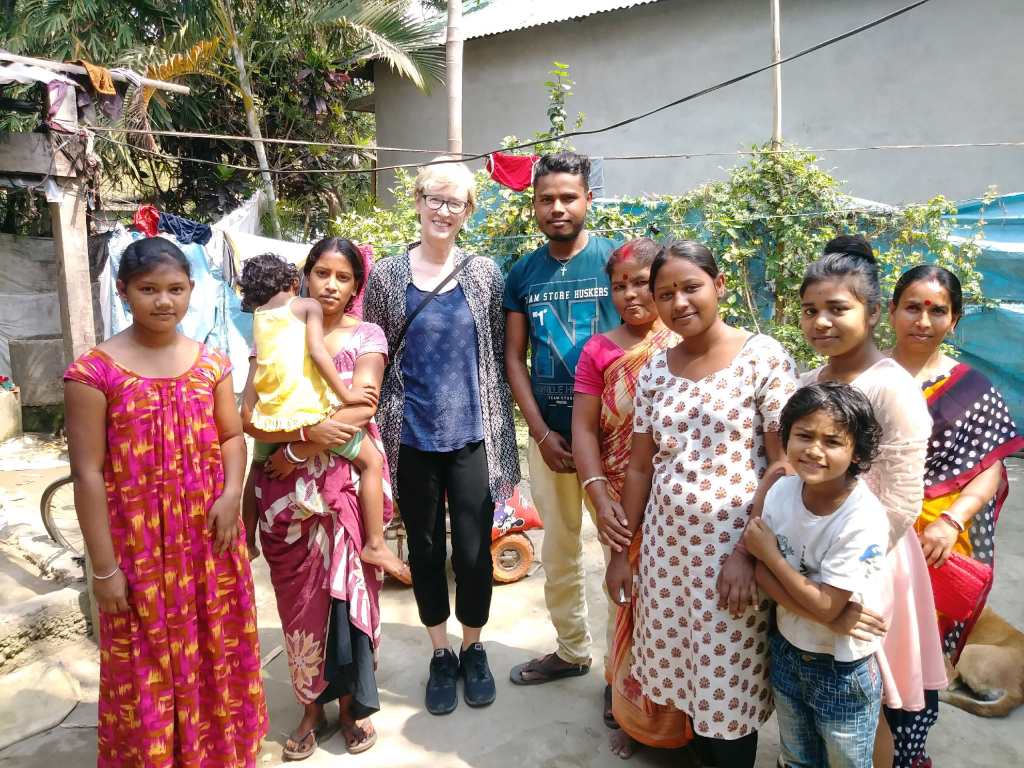
More friends in Maynaguri. To the right of Julie is Biltu, in front of him is his mother, and in front of her is Biltu’s sister Tuli.
Sarbari, my downstairs neighbor, acting proprietorial, in her lovely Sarbari way.
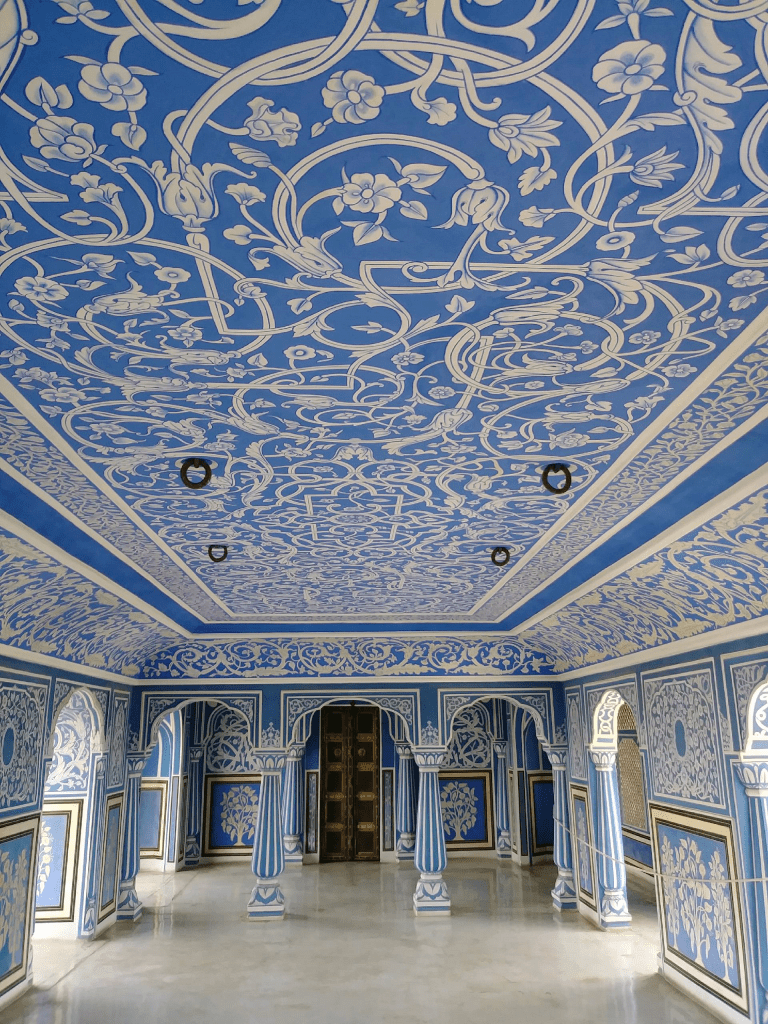
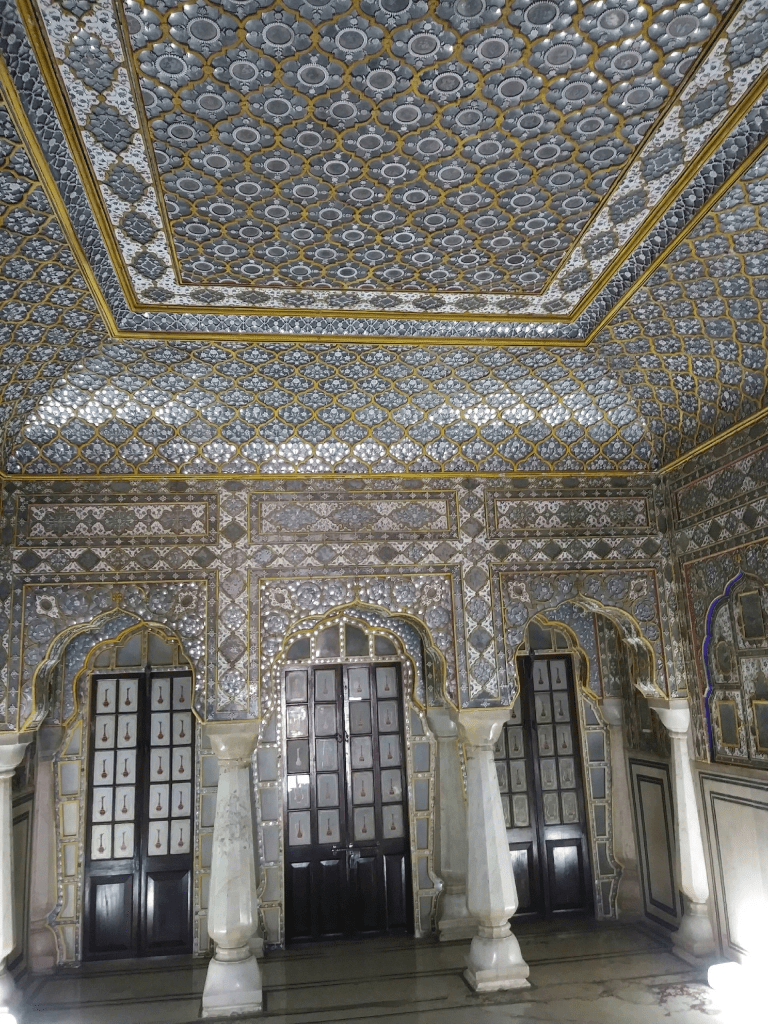
Okay — remember the before and after pics of my flat…? Unfortunately, this picture has absolutely nothing to do with my flat. We took a trip to Rajasthan. Here is an interior in the City Palace, where the royal family of the former princely state of Jaipur resides (only part of the complex is open to the public). The then-Maharaja and his family surrendered political power upon India’s gaining independence in 1947, but they remain in Jaipur and play an active role in the artistic and cultural life of the city. The current Maharaja is 21 years old, a student at NYU, and a member of the Indian national polo team! Eligible bachelor! (By the way, were you wondering what the black rings attached to the ceiling are? That’s where you hang the swings, of course!)

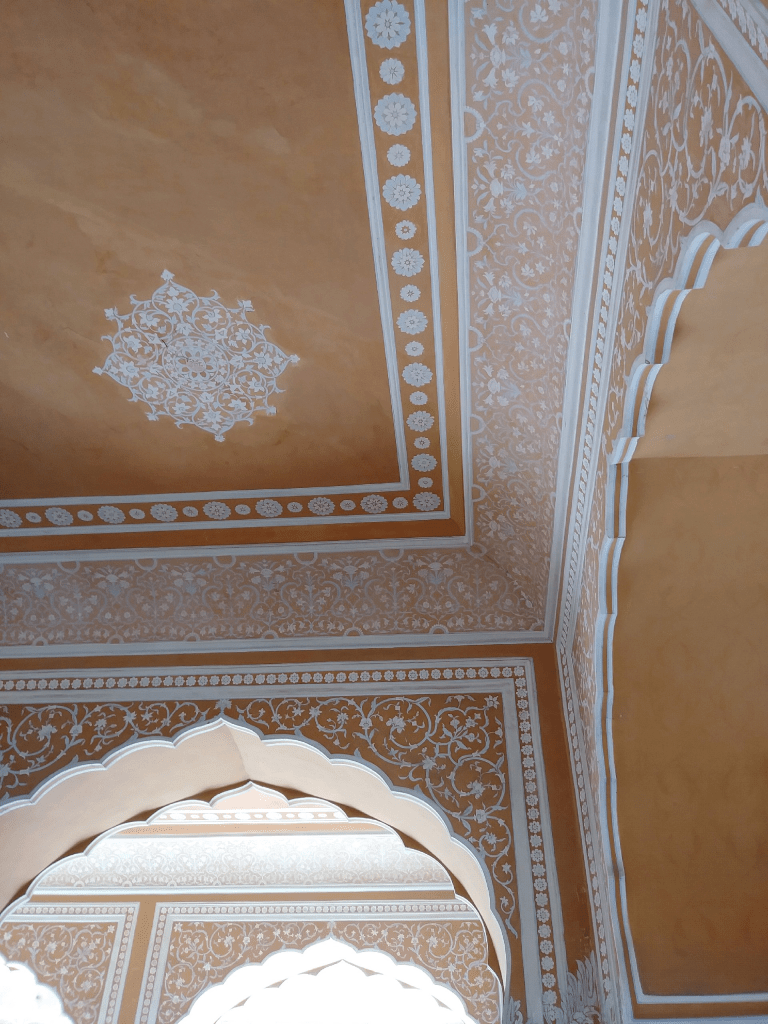
This also has nothing to do with my flat. A ceiling in the Jaipur City Palace.
Also not a ceiling in my flat…
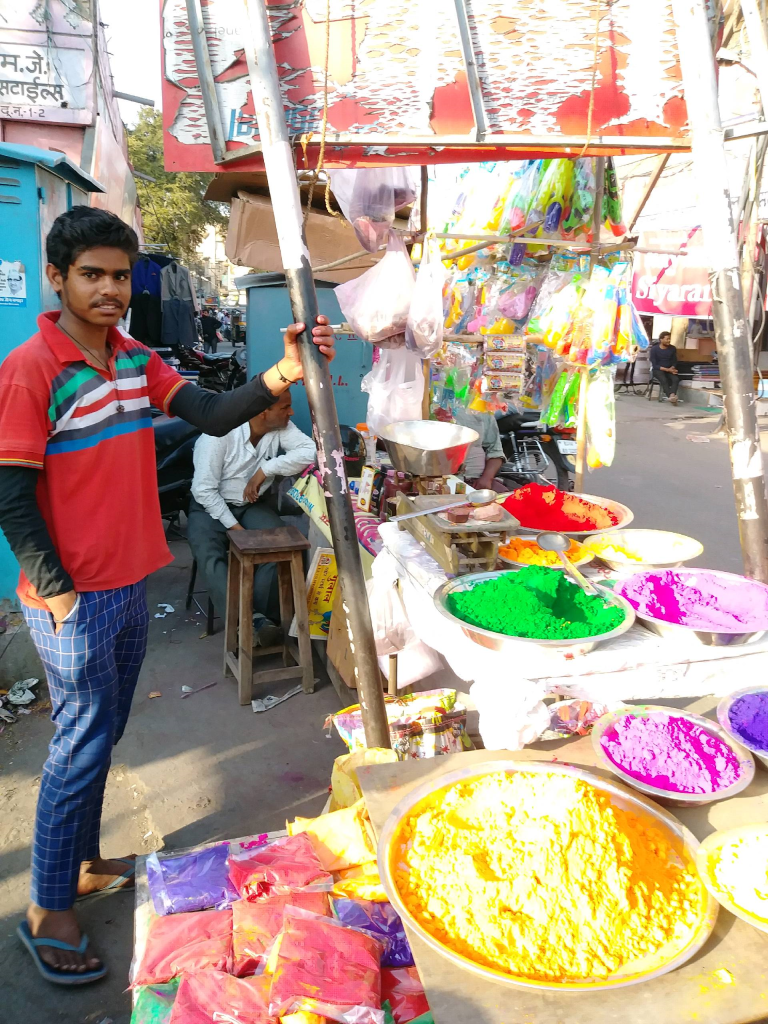
Selling Holi colors in Jaipur.
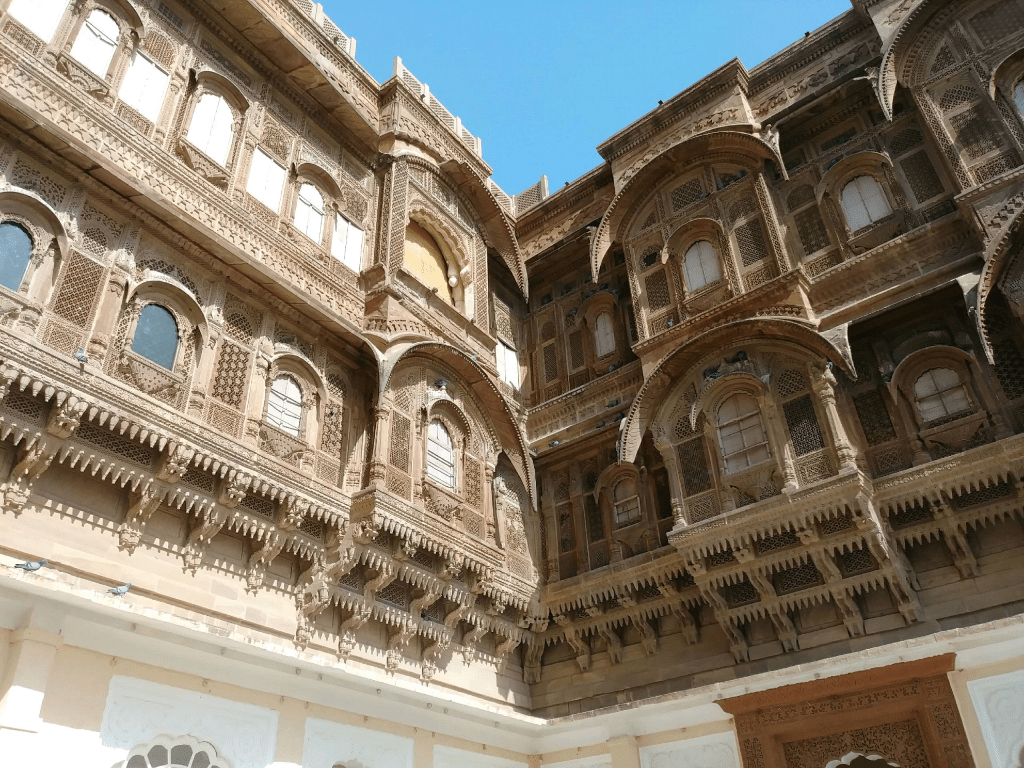
After Jaipur we went to Jodhpur. This is part of the Mehranghar Fort in Jodhpur, built in the mid-15th century by Rao Jodha, founder of Jodhpur. Like Jaipur, Jodhpur was a princely state whose rulers were divested of power in 1947. (This picture is just a tiny portion of a huge and amazing fortress.)

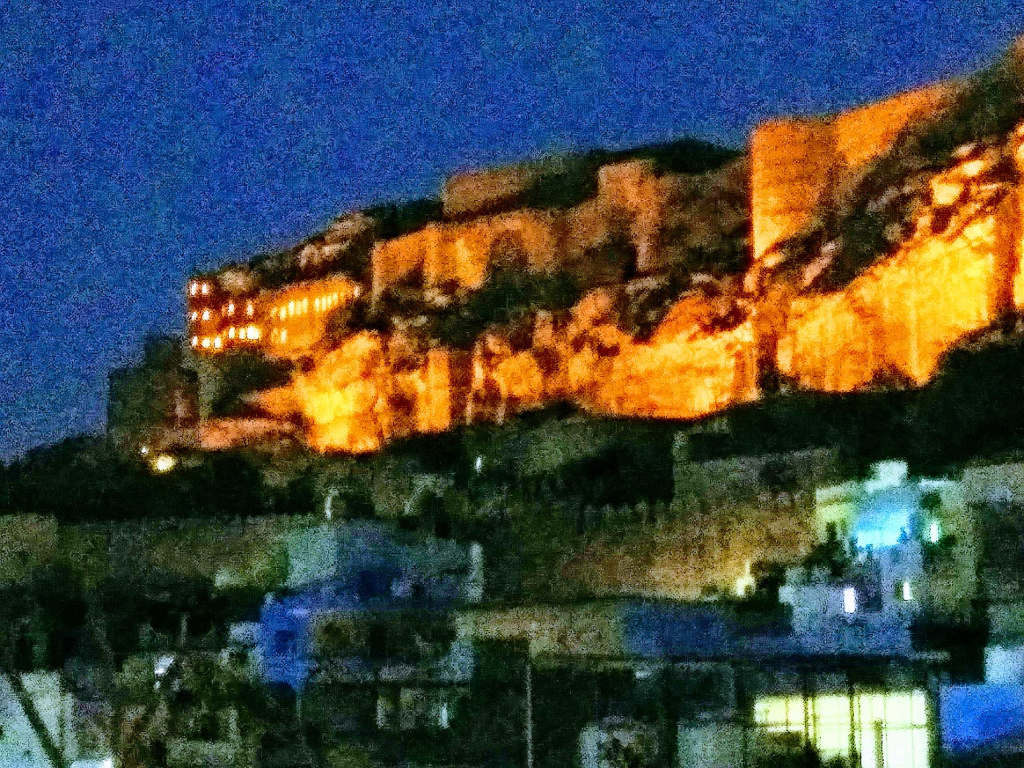
Here is the Fort in all its (blurry LG phone camera at nighttime) glory, photo taken from the rooftop restaurant at our hotel. Jodhpur is sometimes called the “Blue City”. Many homes are painted blue, supposedly because they are Brahmin homes and blue is the color associated with Brahmins. I don’t understand the caste system enough to write about it. Caste was made illegal by the Indian Constitution of 1950, but many aspects of caste remain important in India today.
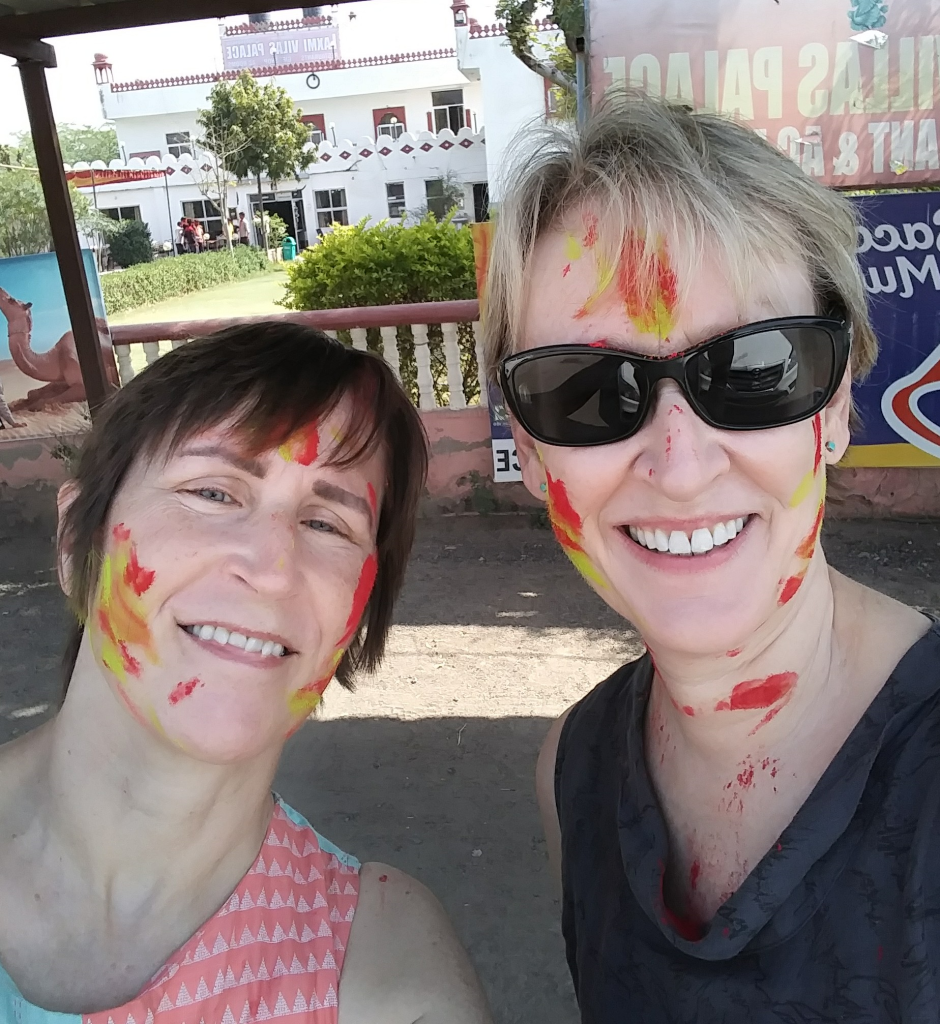
We got Holi-ized. Thanks for coming Julie!!

Usual and Unusual

Here is a post about what I did today, Wednesday, March 6, 2019.  It was a kind of interesting day. A mixture of usual and unusual things happened. 

First of all, my friend Julie is here visiting from Seattle, which is great.  She arrived about five days ago.  We’ve been busy and not busy doing things and not doing things.  Soon we will be busier because we will be taking a trip to Darjeeling and to Sikkim.  More on the adventures of Julie and Mary to come!

This morning I started to walk to campus, but after walking for a few minutes, I thought I’d take a toto instead.  There was a toto guy right there so I told him I was going to NBU and could he take me to Gate #3 for 40 rupees?  (The totos don’t have meters, so generally you have to establish the price in advance.)  He shook his head “No.”  So I said, 50 rupees?  “No.”  So I just walked.  I don’t know why he wouldn’t take me.
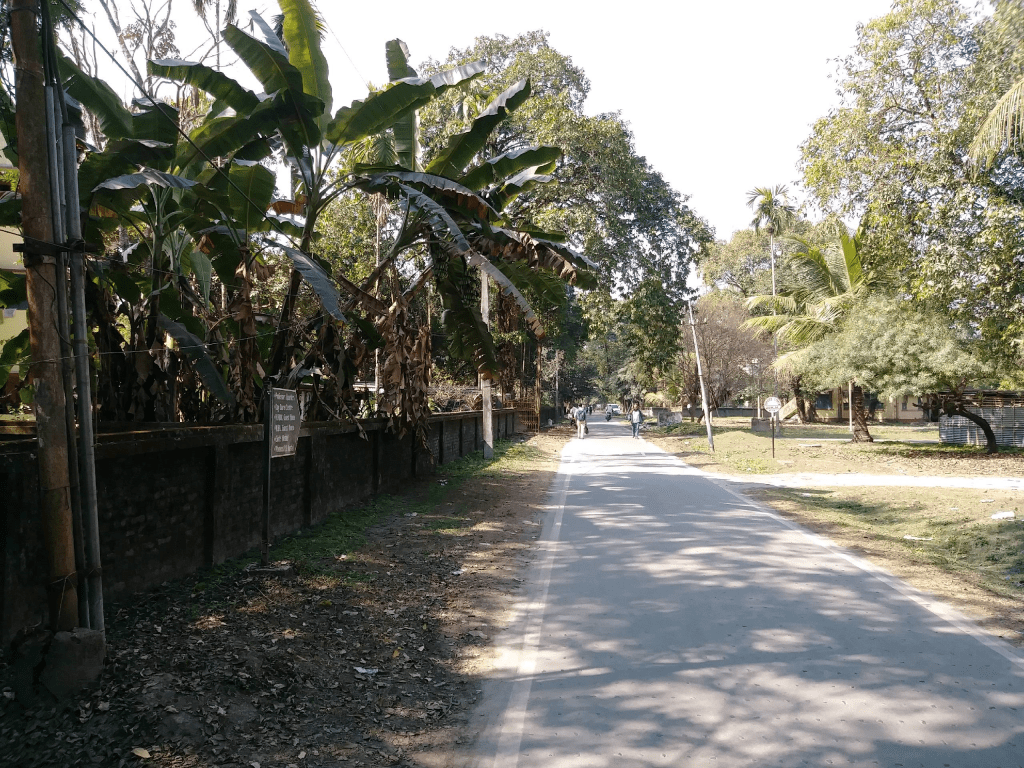
On the NBU campus — it is quite peaceful compared to the surrounding city area.

En route, I ran into an elderly woman I have seen several times on my walk.  The first time I saw her she was shuffling along, struggling to carry a gallon of water.  So I had gestured asking if I could help her carry it.  She indicated no, she could do it herself.  The next time we saw each other we smiled and greeted one another.  And that happened a few more times.  Then this morning when I saw her she came to me and we greeted each other and stood clasping each other’s hands.  Then she said, “Bukhar,” and pointed to herself.  And then she said, “Rupees?”  “Bukhar” means “fever” (I think she just meant she was sick, since we were holding hands, I could tell she didn’t feel hot).  You know what rupees means.  I just shook my head “no,” and walked away feeling pretty bad about it all.  I never know how to handle that sort of thing and feel I don’t have a good answer.

I got to campus and went to my office.  After getting some emails out of the way, I started to prepare a lecture on the Vietnam War for tomorrow.  I found out yesterday that I could give a lecture to the world history class about the Vietnam War.  And that I would have an hour for the lecture.  Let’s see how far I get in one hour. 
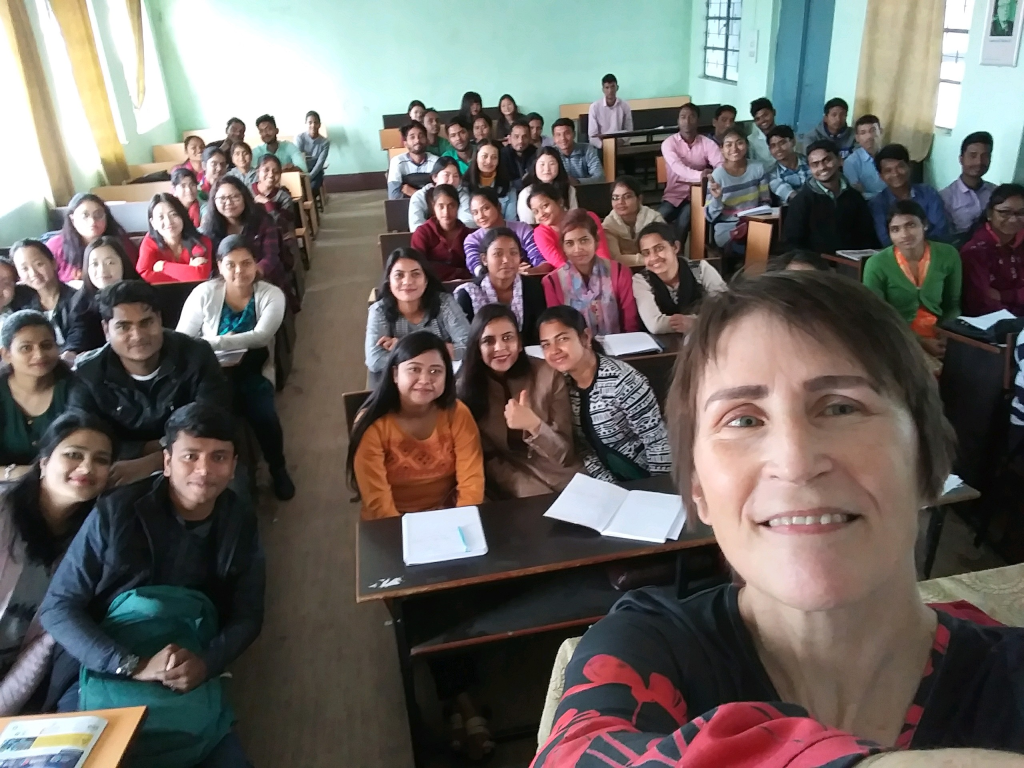
Selfie with my class.

They are doing construction on the roof of my building.  It is a flat concrete roof, and there is a lot of pounding and scraping going on.  Today there were machines involved and it was terribly loud and since it sounded like whatever was happening was happening directly over my office, it was scary. I kept imagining a freak accident that would end my life in a split second.  I walked out of my office to gather my wits and Somnath (the peon) walked by and I told him I was scared!  He smiled at me and said, “No, ma’am, everything is fine.”  So, I went back into my office, assured that everything was fine.  And it was. 

One student came to my office and asked if I would appear in a documentary she and some other students are making about local tribal people.  I told her I know nothing about the topic and regretfully declined.  When I told Julie about it later, she suggested that I could appear in the documentary as the one asking questions about local tribal people.  My brilliant friend!  But alas, I think my opportunity for a star turn in this particular documentary has come and gone.

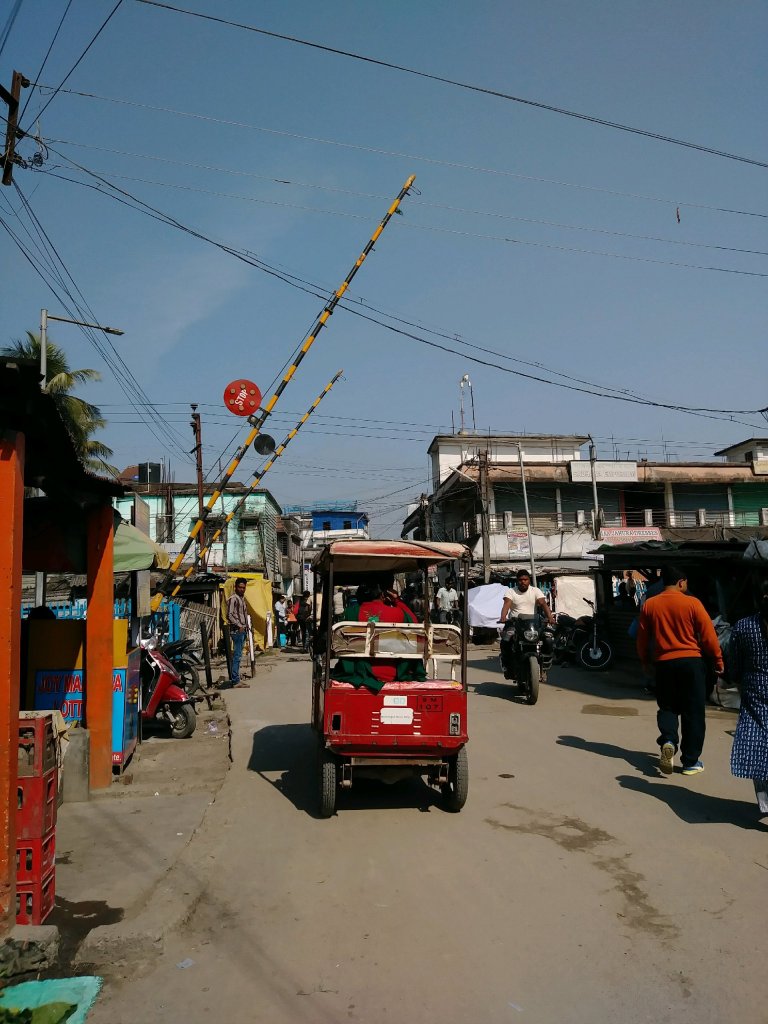
This is apropos of nothing in this post, and I don’t remember whether I posted this picture before! This is a “level crossing” on the way to campus.

Then one professor (name and identifying details withheld) came to my office to say hello, after we had played email tag for about a week.  The hour-long conversation was more of a “versation,” on the professor’s part—in other words, get rid of the “con” part of “conversation” and you have an idea of what happened.  (“Mansplaining” would be another descriptive word.)  As we sat facing one another across my desk, I became increasingly desperate to get out of the situation.  Finally, I thought to myself, “WWMMHD?”  (What would my mother have done?)  I gently scraped my chair back and stood up smiling.  Professor X stood up nearly simultaneously, and I thanked Professor X for the visit and off Professor X went, much to my relief.

While Professor X was in my office, two students came and asked if they could take a picture of me, which turned into a selfie that included the two students, Professor X, and a very tiny shot of my head floating in the background.  Then two more students came and presented me with a lovely invitation to attend an International Seminar on “Social Movements and Development Issues” at which my “kind presence and active participation is solicited” (so read the printed invitation).  And then, while Professor X was still there, two other professors came and invited me to give a presentation at a seminar on “Language, Culture and Society.”  I said I didn’t know what I could talk about at such a seminar since it wasn’t really in my area of expertise, but they explained that I could talk about my local area, which I take to mean that I can talk about the local culture of Tacoma (?).  Anyway, I said yes, but am going to see if I can find out what other people will be presenting about and maybe I can come up with something worthwhile that will fit in somehow. 

Then, I walked home, and did a little food shopping on the way.  I stopped at “my” fruit vendor’s stand.  The elderly gentleman who owns the stand is quite distinguished looking, and when I pointed at the green grapes, he picked a couple to give me a sample – yes, very sweet, could I have a half kg?  I also got a half kg of small bananas.  I paid the 110 rupees (about $1.50) and put the grapes in my bag.  As I walked away, he hollered after me – I had forgotten the bananas.  A gentleman who was waiting to purchase some fruit helped me fit the bananas into my bag and off I went.

This is a type of fruit –I don’t know the name, but here it is called a type of berry. It has a very mild taste and a texture somewhat like an Asian pear. It has a pit like an olive pit.

My next stop was a small shop that is like a grocery store (I suppose it actually IS a grocery store – why do I say it is LIKE a grocery store?).  When I left I asked the clerk if the road that ran next to the store connected with another road that goes to my apartment building and he didn’t know, but a woman standing there knew and she told me that it did!  So I found a new way to walk home, a much quieter way than my usual route through the congested market area.  A relief! 

On my way home, I saw a stray dog that I had first seen about three weeks ago.  The first time I saw it, it had a horrible open wound, where one of its legs had somehow been cut off.  It was a horrible sight, and I couldn’t understand how the dog could survive such an injury and I also couldn’t imagine how painful it must be or how the dog could bear it or how the wound was not infected.  I saw the dog several times after that.  But I hadn’t seen the dog since I came back from the conference I attended last week.  I assumed it must have succumbed to its wound.  So I was quite surprised to see it today – and I don’t know if I was happy or sorry to see it. 

Then I got home and Julie was here and I told her about my day!  And she told me about her day!  Both of us had usual and unusual things happen today.

Two of Tea

The Matigara Tea Estate, just a couple minutes’ walk from my flat. (Sounds a bit idyllic, but not a particularly peaceful walk — have to cross a major highway, dodging cars, trucks, totos and cows!)
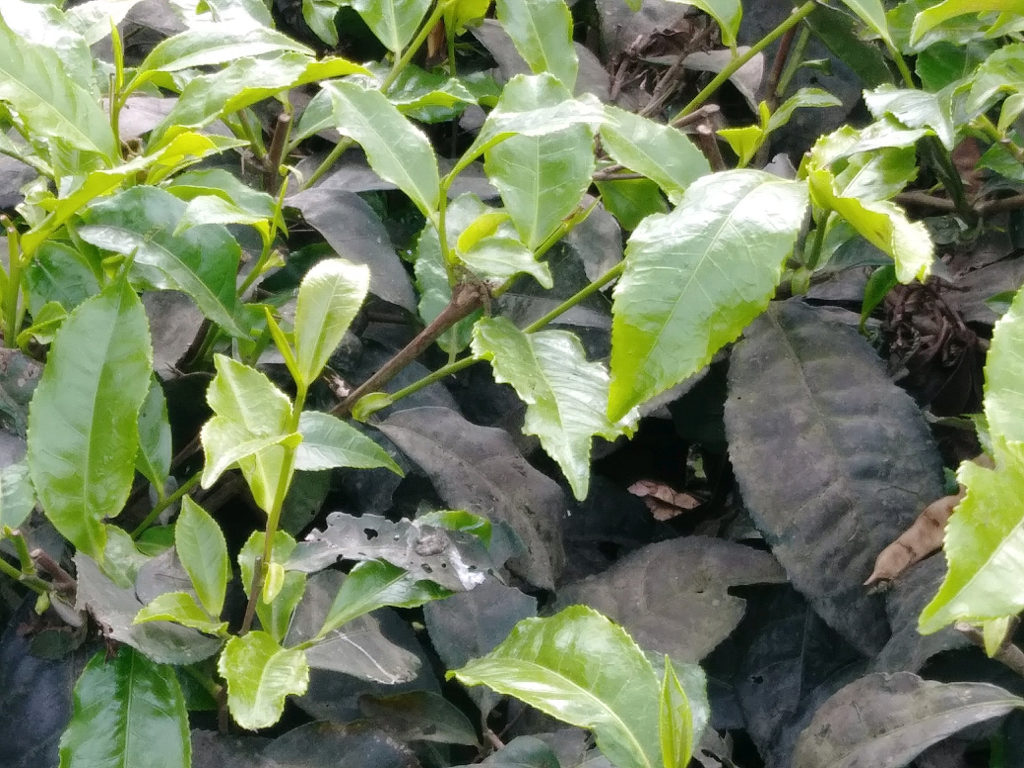
Close-up of a tea plant. I am not sure exactly when harvest will begin. For the highest quality teas, only the top three leaves are plucked. The tea first harvest of the year (usually three harvests annually) is called the “first flush” and is the highest quality. I heard the other day that the queen (QEII) drinks a cup of Darjeeling tea each afternoon. I imagine she drinks first flush/top three leaves tea!

Dear Le Meridien Hotel

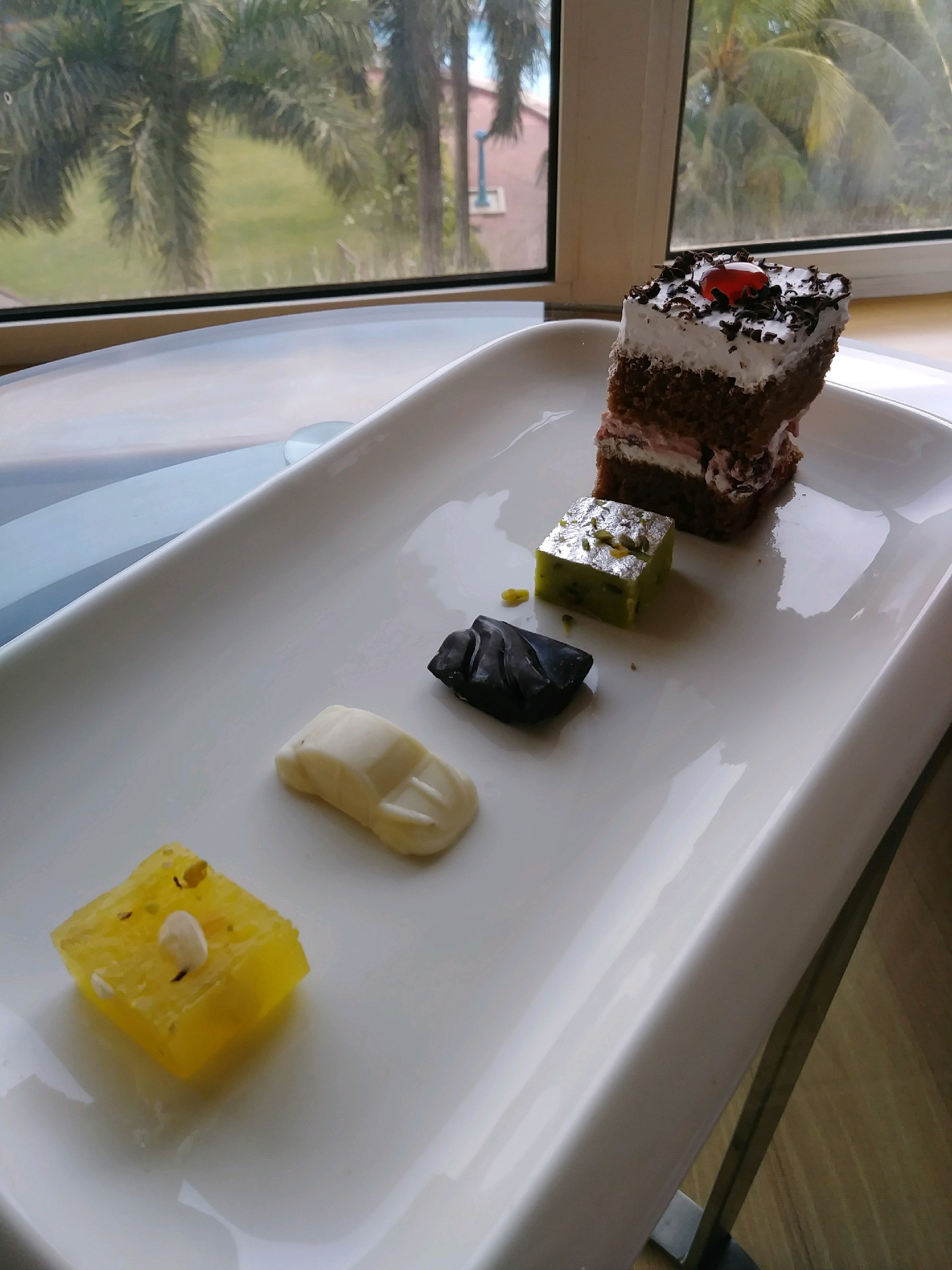
Thank you for leaving a plate of treats in my room while I was out, including white chocolate shaped like a car.
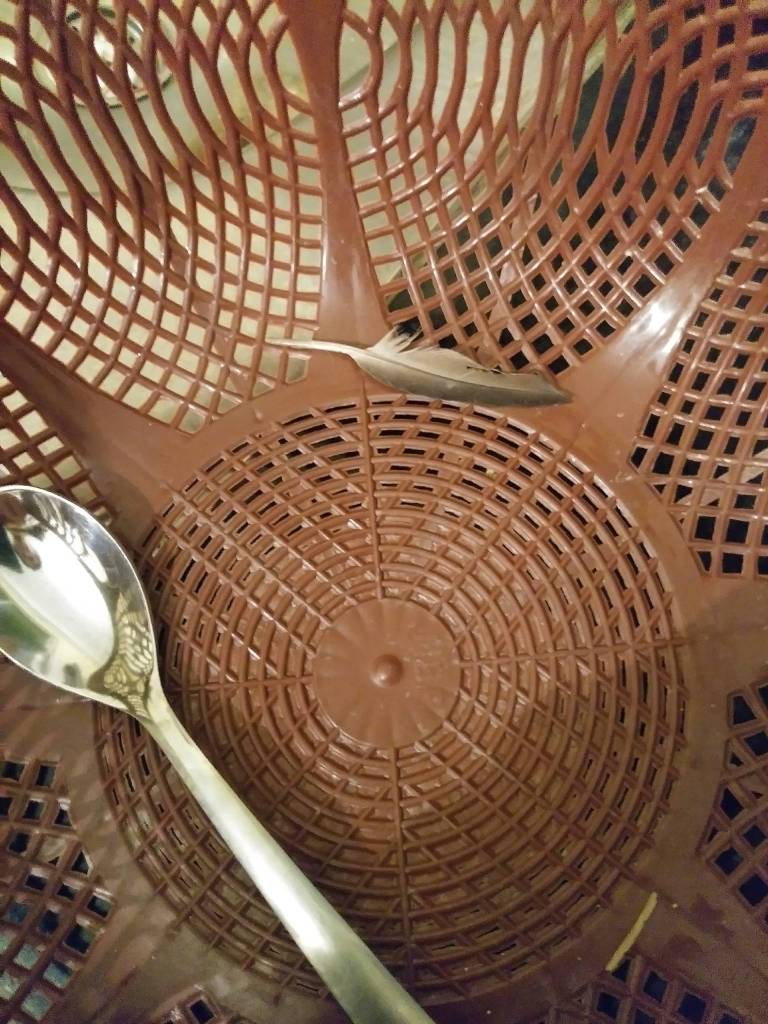
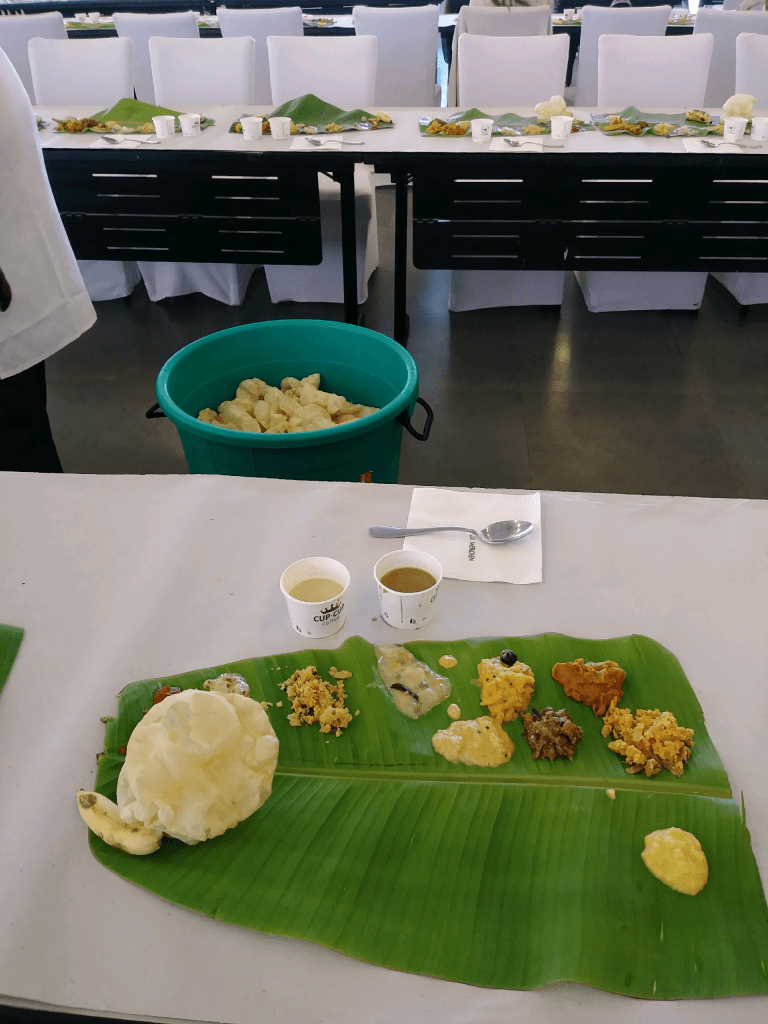
Thank you for a delicious South Indian lunch served on a fresh banana leaf, including puris served out of a plastic garbage can.
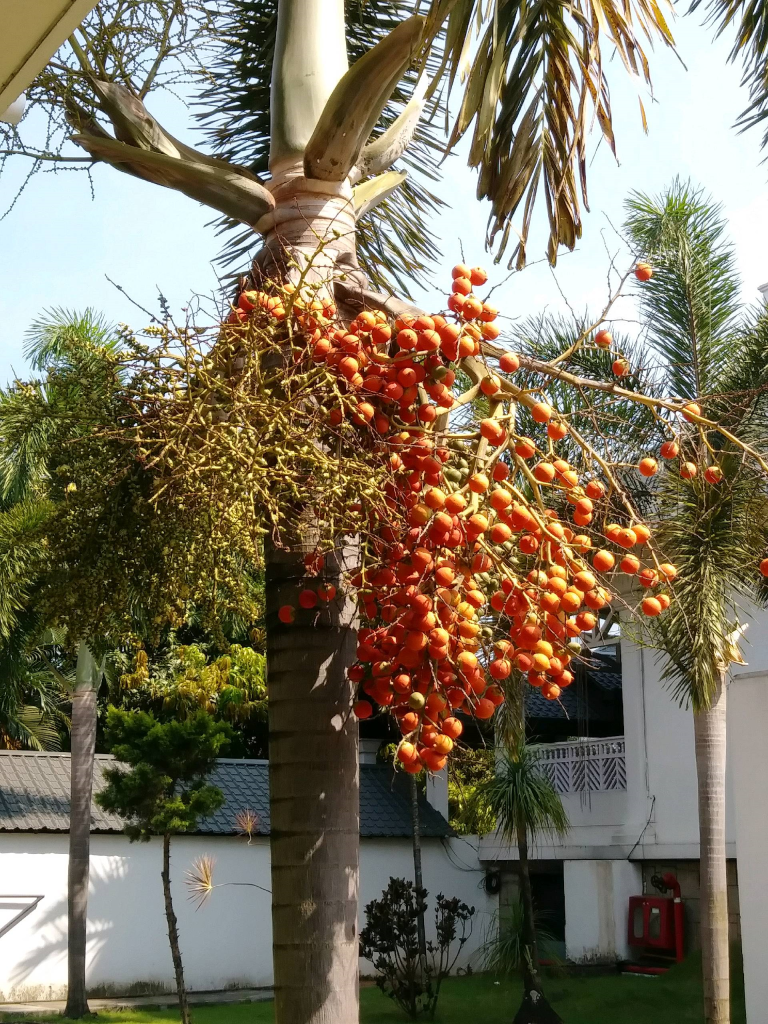
Thank you for such interesting flora that I enjoyed gazing at, including the fruit of this palm that looks like oranges but is not oranges.
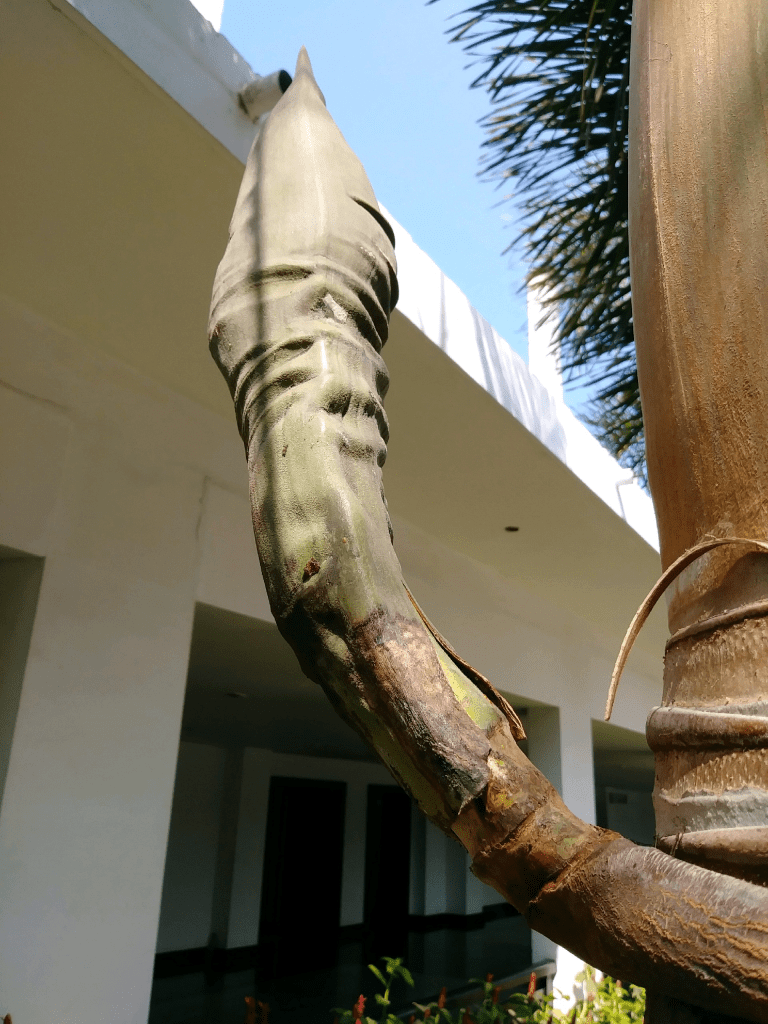
And for letting me see what a palm frond looks like before it is a palm frond.

Nine Degrees North

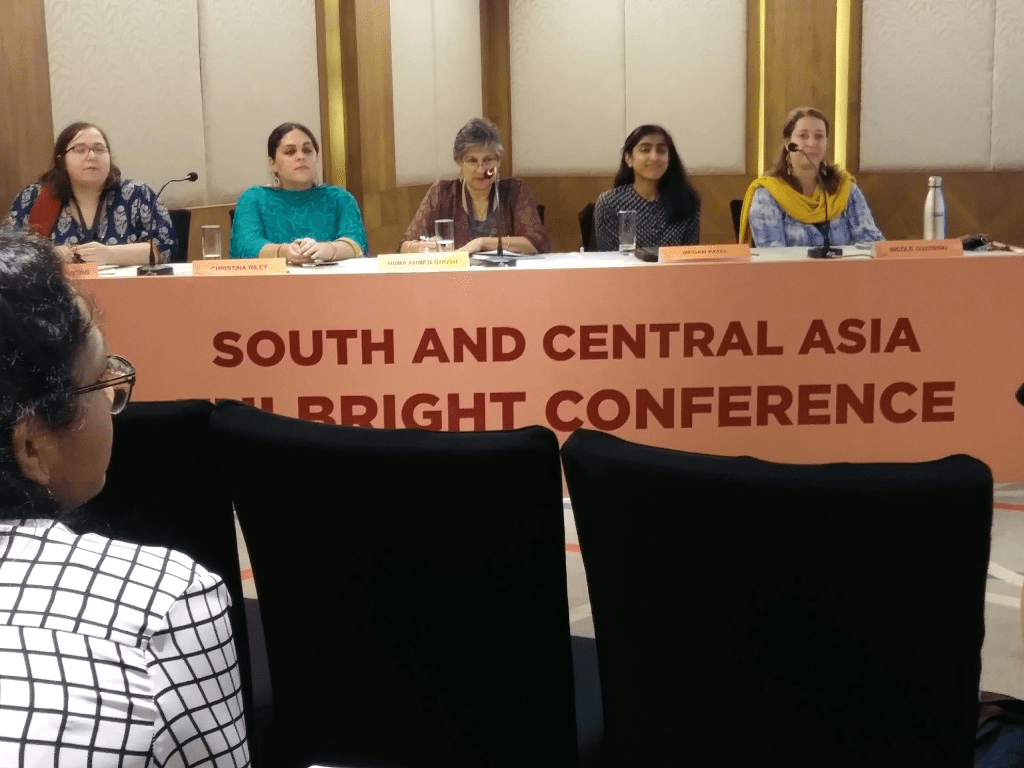
I am in south India right now, in Kochi (formerly Cochin) in the state of Kerala for the Fulbright conference. Fulbrighters from around India, Nepal, Bhutan, and Central Asia are here to talk about their projects. Some amazing presentations! There are over 100 participants, including about 60 Masters and Ph.D. students here to do research. They are really inspiring!

A panel of presentations on Gender Studies and women’s issues in India. Such a lot of smart young women! Really inspiring.
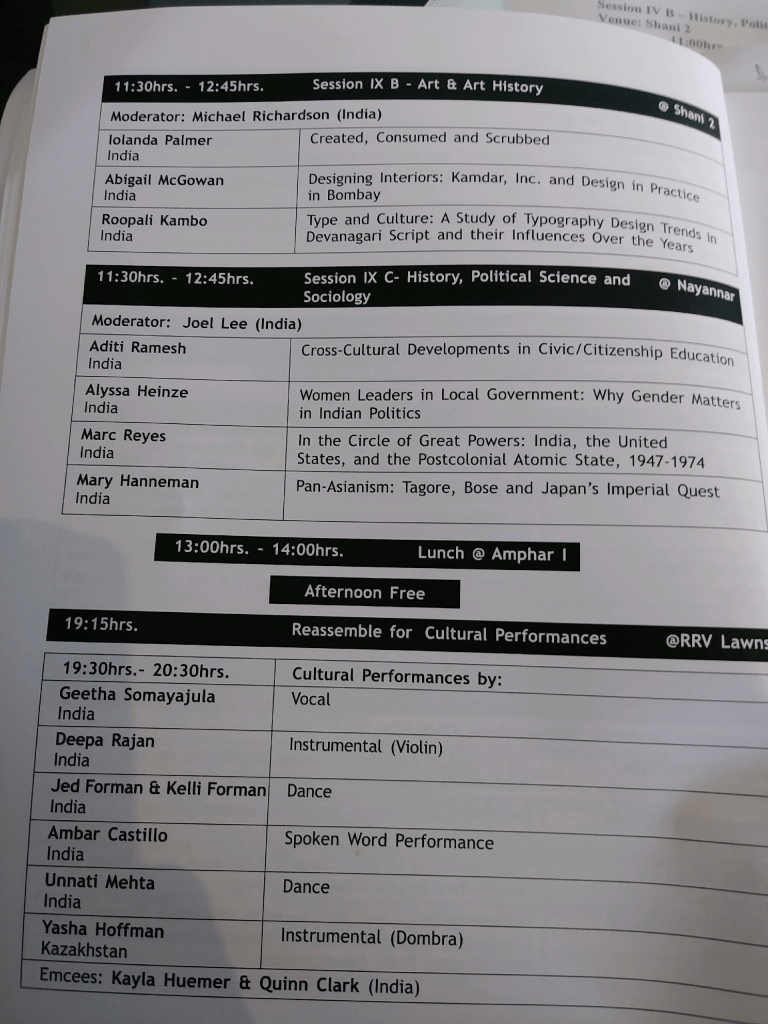
My paper is the last paper in the last paper session of the conference…
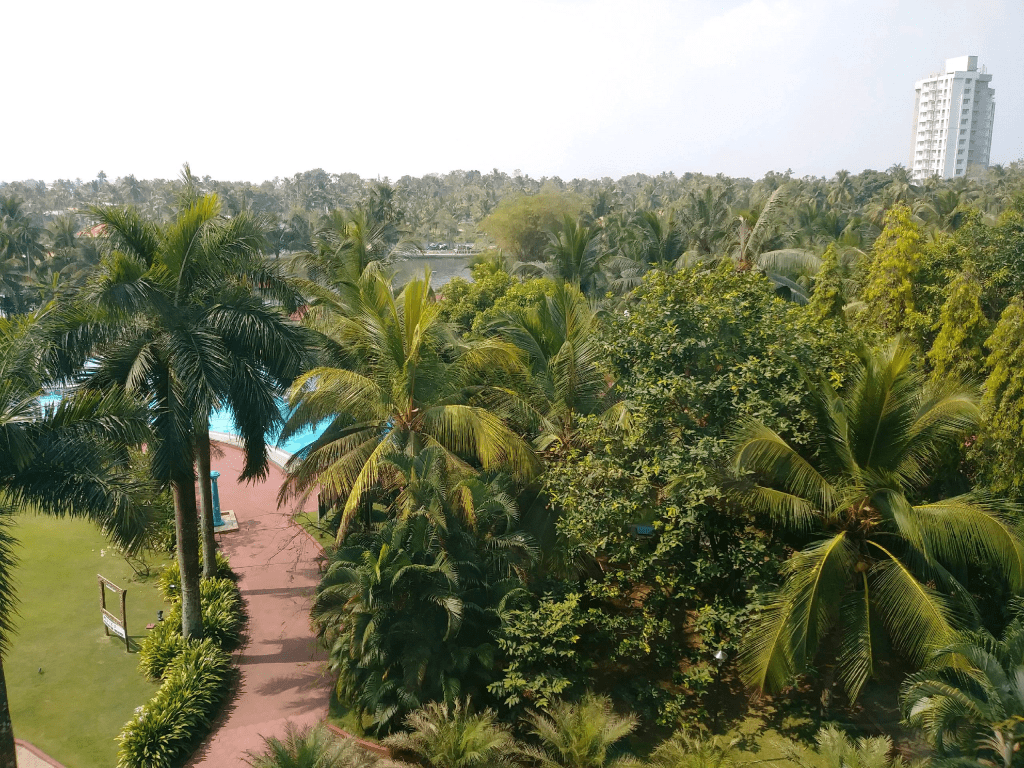
View from my hotel room — living in the lap of luxury!
This is the farthest south I’ve been in the world – nine degrees north of the equator. I am reveling in the luxury! Kerala is known for its spices, cashews, and ayurvedic medicine. It has India’s highest literacy rate (nearly 94%, compared to the national Indian average of 74%).
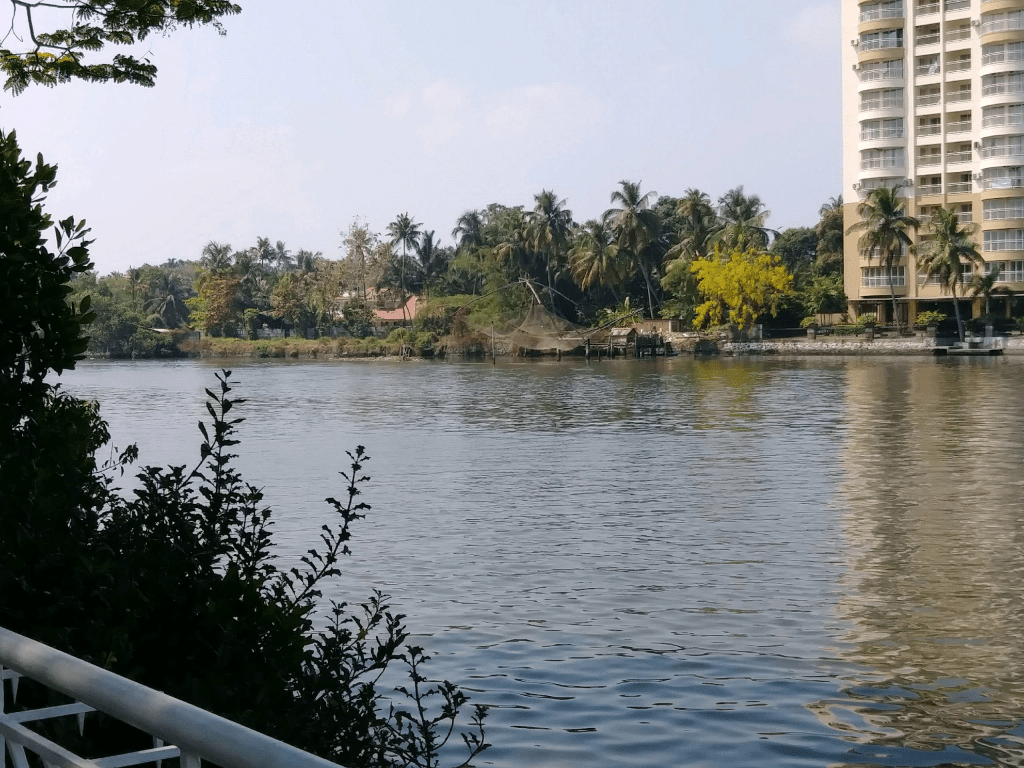
The state of Kerala is filled with lakes and canals. Terrible flooding hit in the summer of 2018. This lake is part of the hotel grounds.
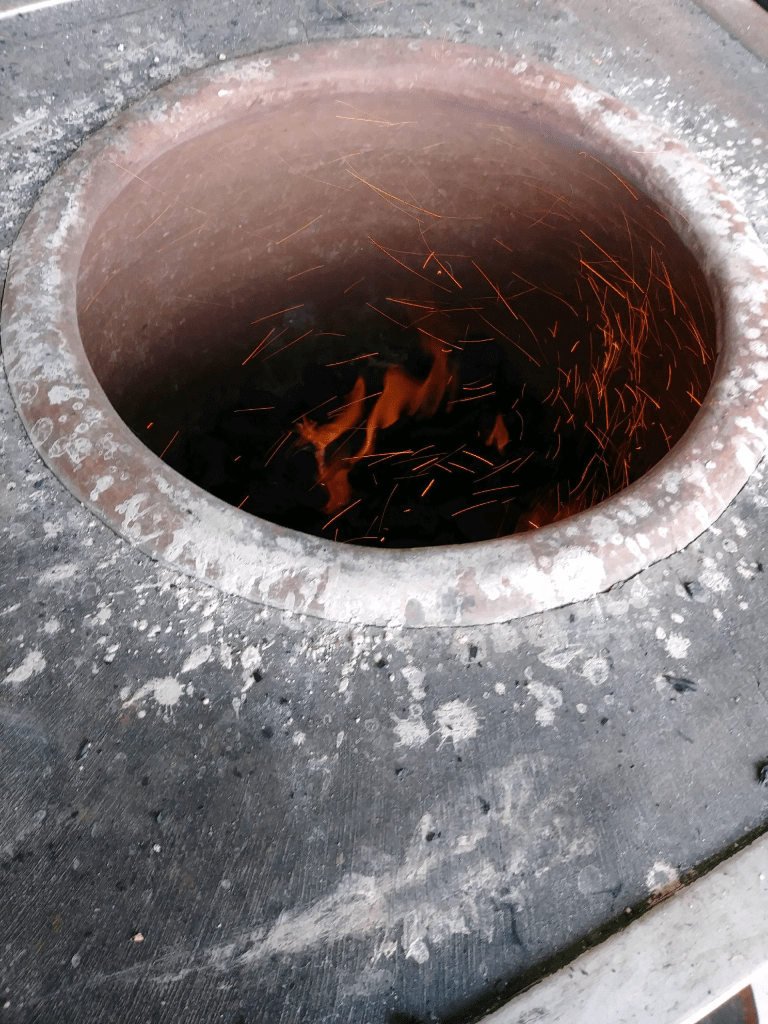
Tandoor oven that was fired up this morning around 10:00 in preparation for making naan for lunch at 12:30. Amazing food!
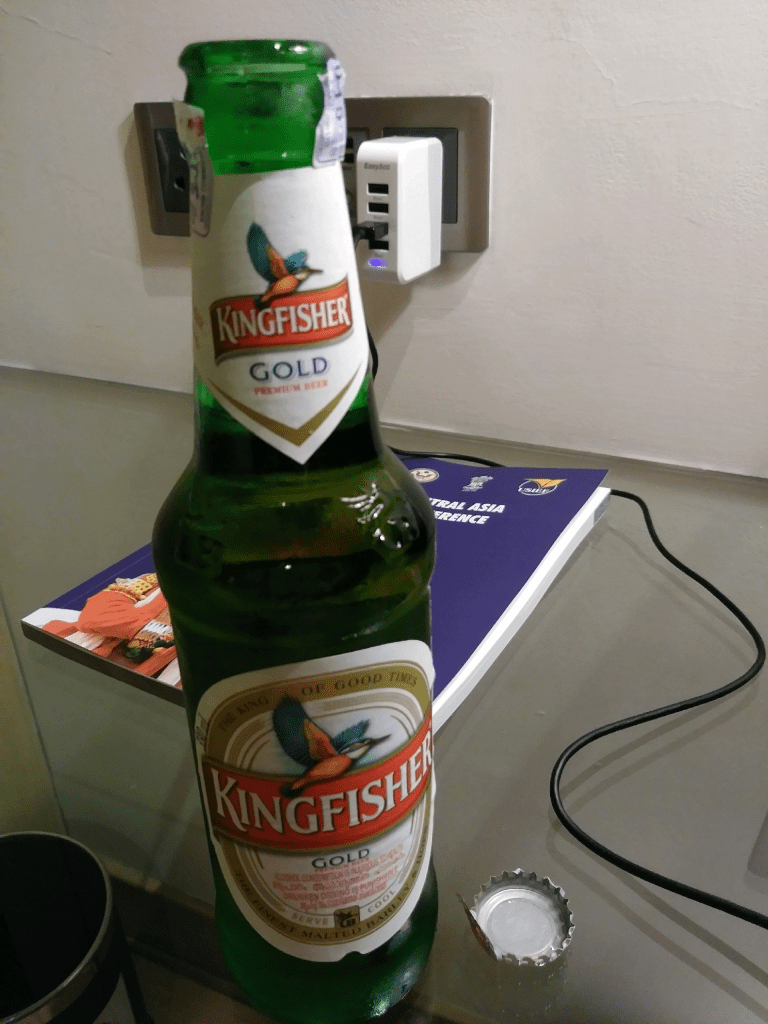
Mini-bar lyfe. My first beer since I arrived in India. India is not “dry” per se, but it isn’t easy to find alcohol and in any case, for a woman to buy it — pretty sketch! No bottle opener in the hotel room (yeah, they have beer, you just can’t open it!). Acknowledgments to Dr. Li and China for teaching me how to open a bottle without an opener (and not with my teeth). I owe you a cold one!